



An Honest Review: Channel Islands’ New Customizable Spine-Tek Construction
We said the Channel Islands Spine-Tek didn’t work for light-footed surfers, so they went and developed a new line with multiple Spine sizes.
Roughly one year ago, I wrote a surfboard review for the Channel Islands Rocket Wide that was considered highly critical—not so much of the Rocket Wide itself, but rather of its Spine-Tek construction.
Spine-Tek, for those who don’t know, is Channel Island’s proprietary epoxy surfboard tech. In so many words, it looks like this:
A shallow, inch-wide channel is cut from nose-to-tail on a stringerless epoxy blank’s top deck. CI then fills that chasm with a unique spine made from fiberglass and resin, which acts similarly to a stringer in terms of strengthening the board, but also provides a laundry list of other presumed performance benefits, including (via CI):
- it flexes under pressure and then returns the surfboard back to its natural rocker
- provides a more lively and responsive feel
- it uses elastic and kinetic energy to provide more drive, speed, power, and flow
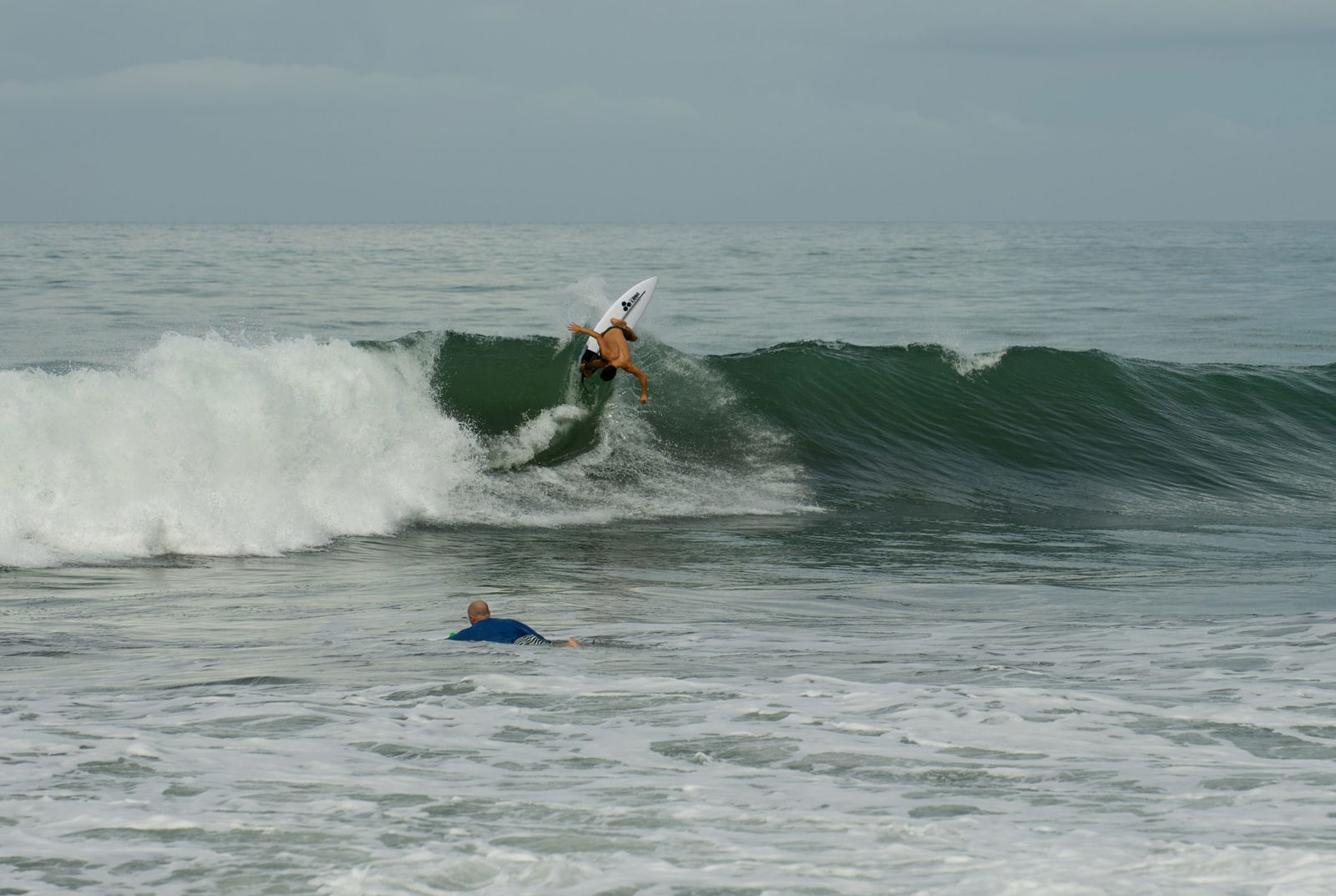
Spinetek, in action.
Photography
Nico Lugo
It would be easy to interpret these claims as mere marketing gimmicks by CI’s ace “spin team.” That is until you consider the reservoir of evidence to support their points.
Shall we briefly go through the list?
- Eithan Osborne on Stab High 2018’s Monster Air Award on a Spine-tek NB2.
- Surfers have won major QS events on Spine-Tek (including this year: Jordy Lawler at the Vissla Sydney Surf Pro)
- The Gudang bros have had visible improvements in their surfing since switching primarily to Spine-Tek when surfing at home.
- Dane Reynolds has been grabbing stock Spine-Tek Neck Beard II’s from the rack every time he visits the CI warehouse (though you wouldn’t know it, because Dane paints over the spine and accompanying tail patches because he thinks they look goofy).
- And most damningly of all, Mick Fanning selected the Spine-Tek Fever as his favorite surfboard in last year’s Stab in the Dark, stating: “The main thing I liked about this board… it just went so fast.”

Wtih Mick, it was all love for the Spine-Tek.
With the evidence mounting in Spine-Tek’s favor, it appeared foolish to criticize such an extensively proven construction. But, as you’ve probably learned from my two-plus years of Stab articles, your author is nothing if not a relentless stick in the mud.
In my Rocket Wide board review, which featured CI’s Spine-tek construction, I wrote extensively about how their “revolutionary design” didn’t work for me. Specifically, I noted that it was too stiff for a surfer of my size, comparing the spine to golf shafts, which have different flex patterns based on each player’s swing speed, and how the current version was clearly made for a hard-hitting son of a bitch.
This didn’t win me any favors in the CI camp.
“We were in a team meeting, like, ‘Man, that was a horrible review,’” revealed Britt Merrick, Channel Islands’ lead designer. “But after we had a moment to think about the critique and talk with some of our other smaller and female team riders, we realized there might actually be something to it.”
So, Channel Islands did something I never could have expected. Rather than ignoring my complaints or choosing to boycott the Joyride altogether, CI explored alternative solutions for us subhumans, hoping they might bring Spine-Tek to life beneath our small, bony feet—just as they had for full-grown surfers all around the world.
Working with their team of certified surf nerds, CI took my golf club theory and applied it directly to the spine, considering all the possible ways to make their fiberglass structure more flexible for the mini-men among us.
Rather than changing the composition of the spine (as some golf shafts do), CI had the brilliantly simple idea of narrowing the fiberglass strip that bisects the board. So, whereas their Standard spine was 30mm wide, CI made the Small version half of that at 15mm. And while they were at it, CI also made a Large version of the spine for the big boys on the block, which was the same width of the Medium spine but .3mm thicker.
Both of these simple innovations altered the flex of the spine to better align with each surfer’s weight. According to CI, the spine a surfer should ride is correlated with their surfboard’s literage.
Anything under 27.4L gets a Small spine, 27.5 to 36.5L gets the Medium version (this group comprises roughly 80 perfect of boards that go to market), and 36.6L and above would go Large.
Large Spine (left), Standard Spine (middle), and Smal Spine (right) for comparison.
Photography
CI
After a couple months of beta testing—which had CI’s grom squad squealing the praises of their new tailor-fitted spines—CI made the brave but logical progression of asking your author, who’d ruthlessly skewered Spine-Tek’s original version, to sample their new design.
Being equally shocked and impressed that the world’s largest surfboard manufacturer had taken my critique constructively and developed a smart solution to the problem—of course I was keen.
Not long after, they hand-delivered a shimmering CI New Flyer* in the small spine construction. Seeing this board for the first time, it was clear that the spine was much slimmer than the ones I’d previously ridden. This, to me, made the craft much more aesthetically pleasing, but that’s hardly the point of this article.
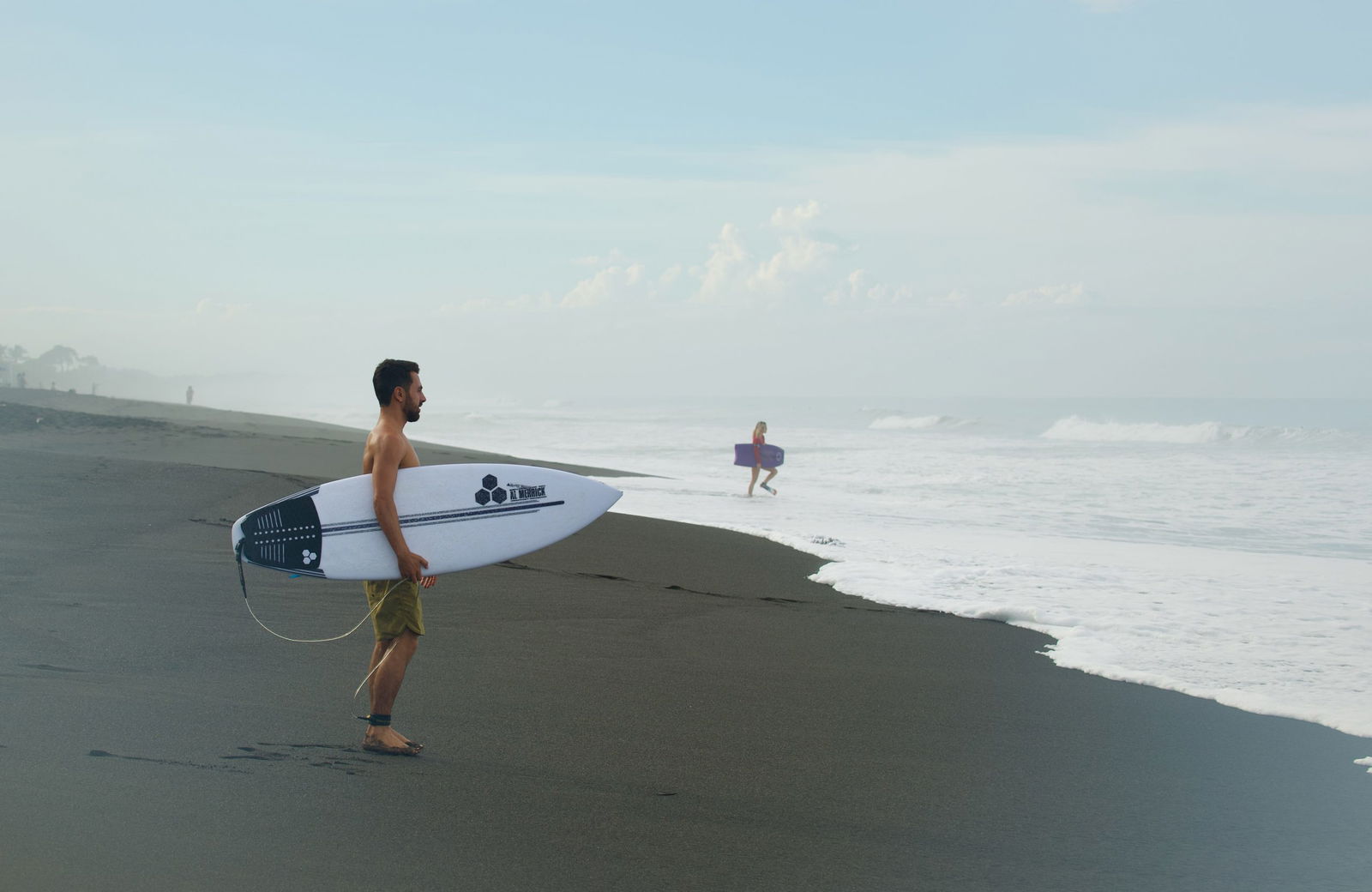
Unsolicited and irrelevant (to this article) surfboard tip: get you a CI New Flyer.
Photography
Nico Lugo
I praised the CI team for their open-mindedness and proceeded to fly the small spine across several international borders, where, on a warm morning in July, I found a chest-high, fairly shitty beach break where I would sample the fruit of my insolence (as mother always said, the squeaky wheel gets the grease!).
Forgive me if this sounds hyperbolic or biased, but the difference was clear from wave one. The small spine, with its increased flex, allowed a surfer of my stature to reap all the performance benefits listed on the Spine-Tek brochure.
It was fast, lively, and responsive. It flexed in and out of turns with a natural rhythm and glide. It even let me fly.
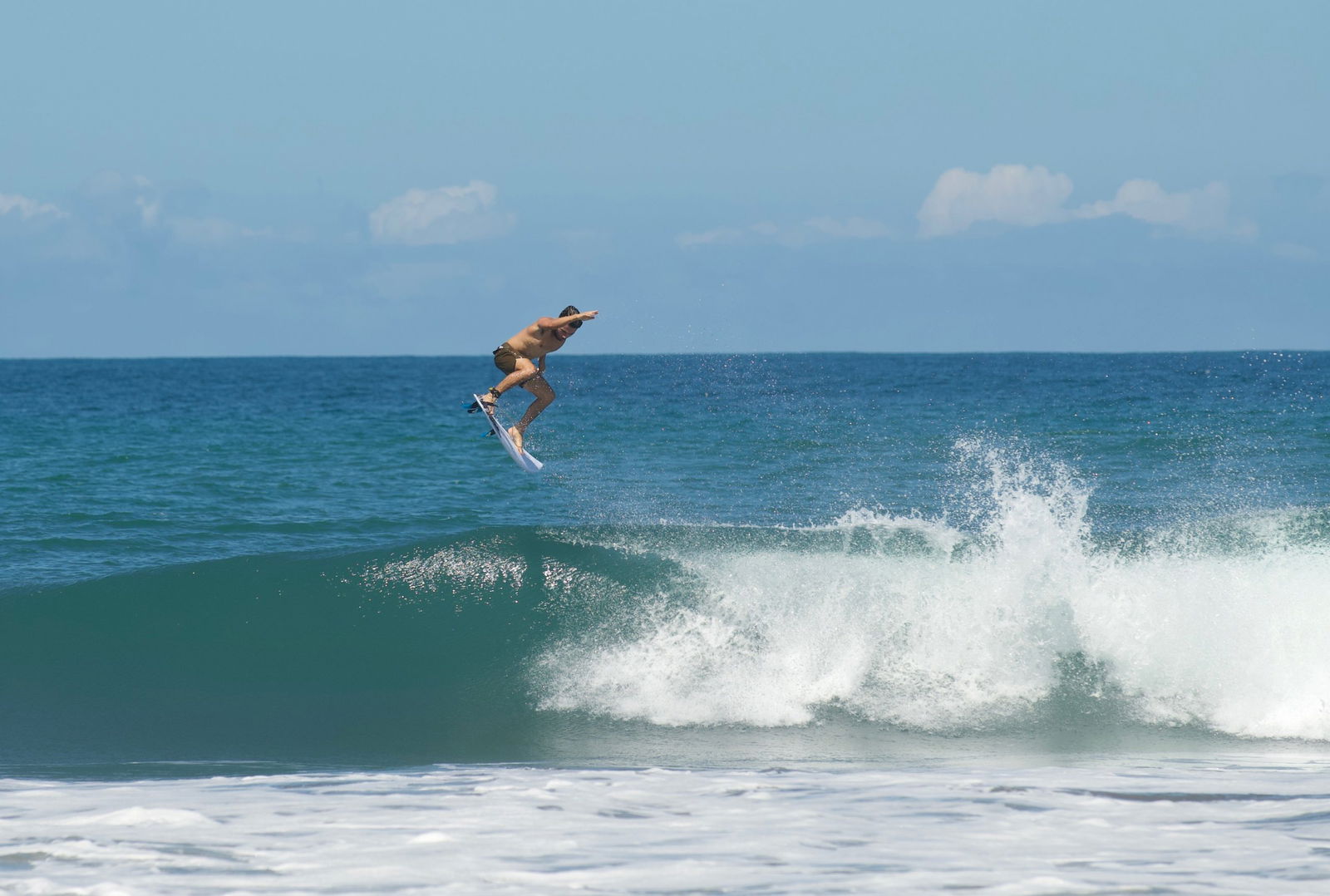
A young boy in love.
Photography
Nico Lugo
Finally (oh, finally!) I understood the hype around Channel Island’s unique, proprietary construction. Everything I’d seen from Mick, Reynolds, and the Gudangs made ultimate sense. Spine-Tek is, undeniably, a brilliant design for small-wave performance surfing.
I would recommend it to anyone—so long as they get it in the appropriate size.
*For those wondering why I chose to ride a different board model for the tech test, it’s because 1. I experienced the same issues with the standard spine on both the Rocket Wide and NB2, meaning that the construction’s performance was not dependent on the board model and 2. I have always really wanted a New Flyer. (The board was just as fun as I expected, btw. Would recommend.)


Comments
Comments are a Stab Premium feature. Gotta join to talk shop.
Already a member? Sign In
Want to join? Sign Up