



Globe’s Sustainable, Lifetime-Guaranteed Rebrand Is More Than A Marketing Driven Shift
“The clutter in the boardsports market and distancing from the real lifestyle and values of core riders was troubling,” – Globe’s Peter Hill.
Today one of the industry’s last surviving surfer-owned brands, Globe, announced a major philosophical shift in their design, production, and distribution moving forward—the most dramatic and forward thinking move we’ve seen any of the major brands make since the pandemic.
“Today Globe announced its “Low Velocity” clothing program—representing a major change in the brand’s approach to product by creating sustainable goods for skaters, surfers and snowboarders. The Low Velocity program was motivated by a desire to address the increasingly excessive production and waste of apparel in the boardsports market. The shift is launched with a systematic realignment of Globe’s apparel range that puts environmental priorities and products of quality and longevity ahead of fast fashion sales of disposable items.”
How much of a priority is the quality and longevity? Two words: Lifetime Guarantee. Allow us to explain.

Taj Burrow in one of Globe’s new Low Velocity staples.
Photography
Globe.
There’s no obfuscating the blows this pandemic has dealt to parts of the surf industry.
While board builders and wetsuit manufacturers have seen big upticks in sales, the same cannot be said for apparel-centric brands which were struggling well before the word Covid required a trigger warning.
Big tent brands have furloughed staff, shipments have ceased, surfing contracts were reduced or in many instances vanquished. One strategy to get out may be to ride it out until a vaccine is distributed and life returns to some sense of normalcy, but considering the industry’s stagnant state pre-pandemic, that mightn’t be the optimal approach.
In fashion, there are many names for new apparel ranges—capsules, seasons, lines, and so on—but they usually hold one thing in common, particularly in the surf industry: there’s usually a lot of it. More clothes than you could ever need for a single year, let alone a season, and too many pages to scroll through to ever see the entire offering.
In industry terms, it’s ‘fast fashion.’
While this term is typically employed toward brands like Zara and Uniqlo, it could equally be applied to many lifestyle brands, surf amongst them. Sure, they’re not selling anywhere near the same quantity of clothes, but they’re operating on the same principles—isolate trends, hammer them, sell as much as you can, dump the rest on the sale rack when the next fad arrives.
Core surfers don’t shop Zara or Uniqlo. They buy less of better, more lasting products—a cultural consumer ethos that lends itself to brands who aren’t trying to be all things to all people. They stick to the essentials, keep their blinders on, and their eyes out for innovation in sustainable, durable, comfortable, timeless fabrics, fits, and designs.
“The clutter in the boardsports market and distancing from the real lifestyle and values of core riders was troubling,” says Peter Hill, Globe Co-Founder, “As founders, we looked at ourselves and thought, What role, purpose and reason for being did Globe clothing have?”
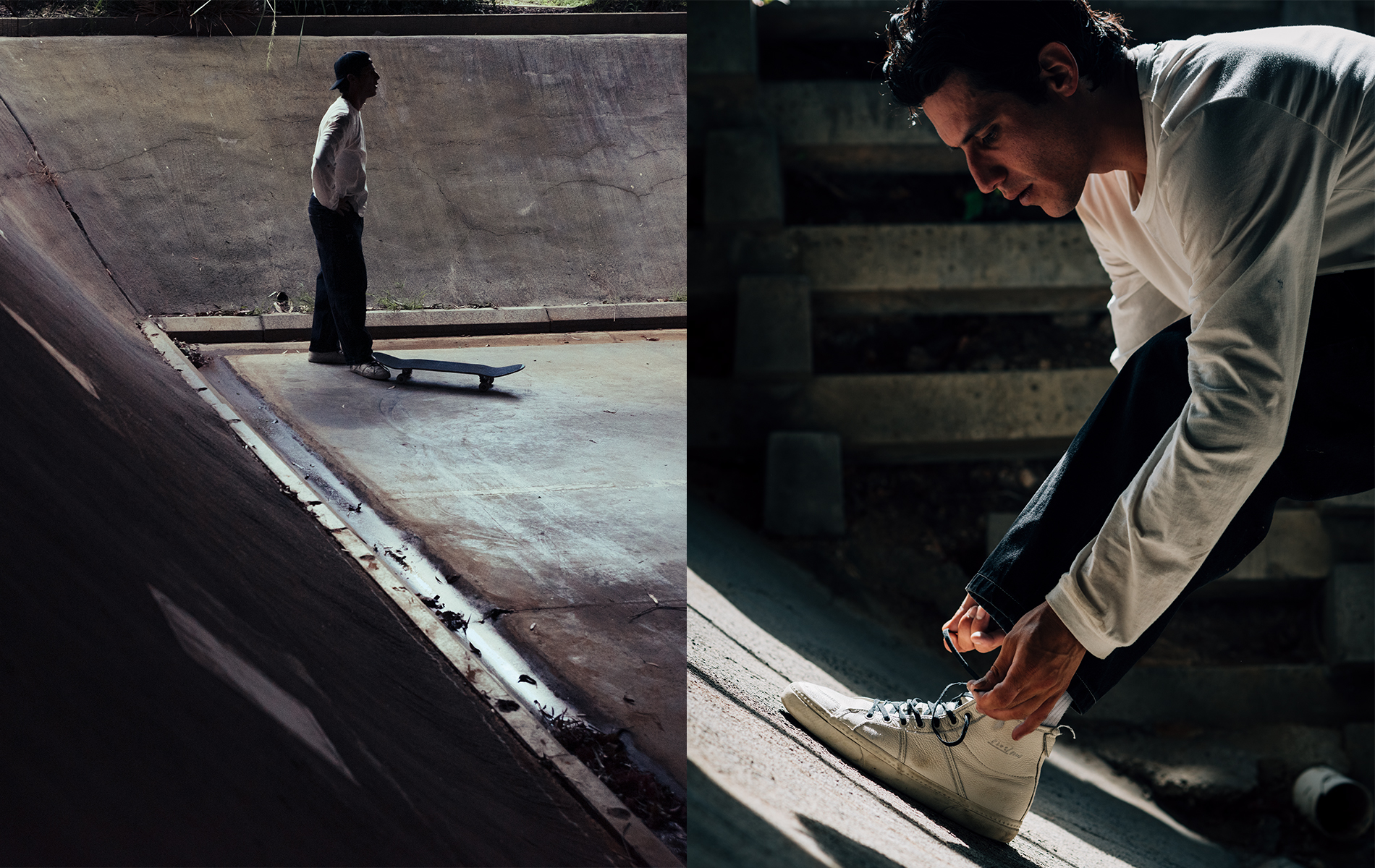
Now, Globe’s “Low Velocity” program wasn’t a top-down initiative, either—it was a reflection of what the brand was hearing from their surf and skate team (both head-to-toe and footwear riders) everyone from perennial collaborator Dion Agius (head to toe), Creed McTaggart (footwear only), Eric Geiselman (footwear only), Noa Deane (footwear only), Taj (head to toe), as well as iconoclastic skateboarders Sammy Montano and Mark Appleyard, and spans their footwear, apparel, and accessories program (which is why the shift sets them apart).
“We wanted to realign our entire methodology to represent the way our riders and customers lived and thought. We wanted to tip the whole approach on its head and make stuff we knew had purpose, authenticity, longevity and, most importantly, to significantly reduce our waste.”
Since the turn of the century, Globe has remained a core industry staple, and it wasn’t just the pandemic which prompted this shift—it came to fruition over the past 18 months, and it’s rumoured the Low Velocity program had a lot to do with Taj Burrow’s interest in signing up head-to-toe.
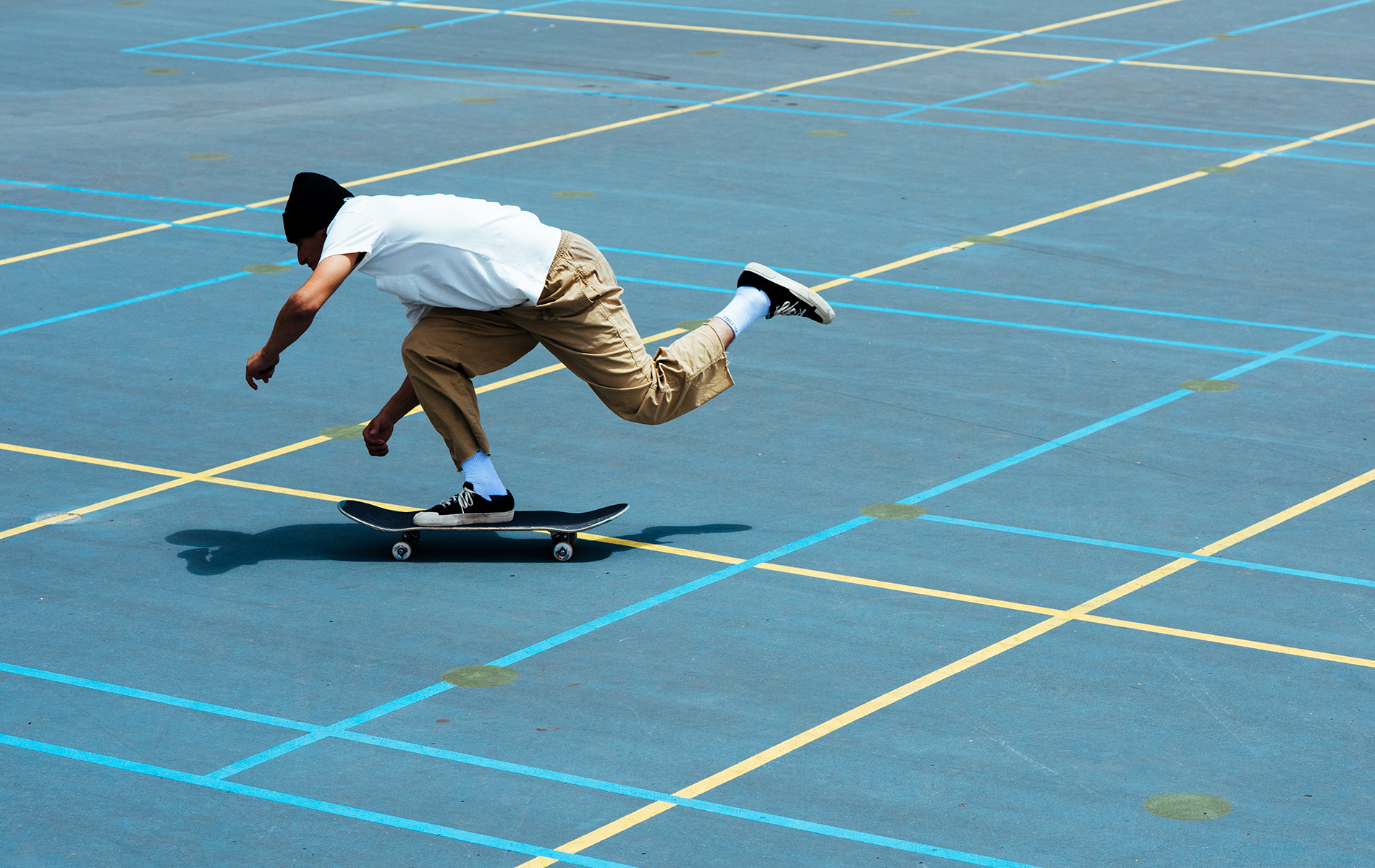
Sammy Montano.
Photography
Globe.
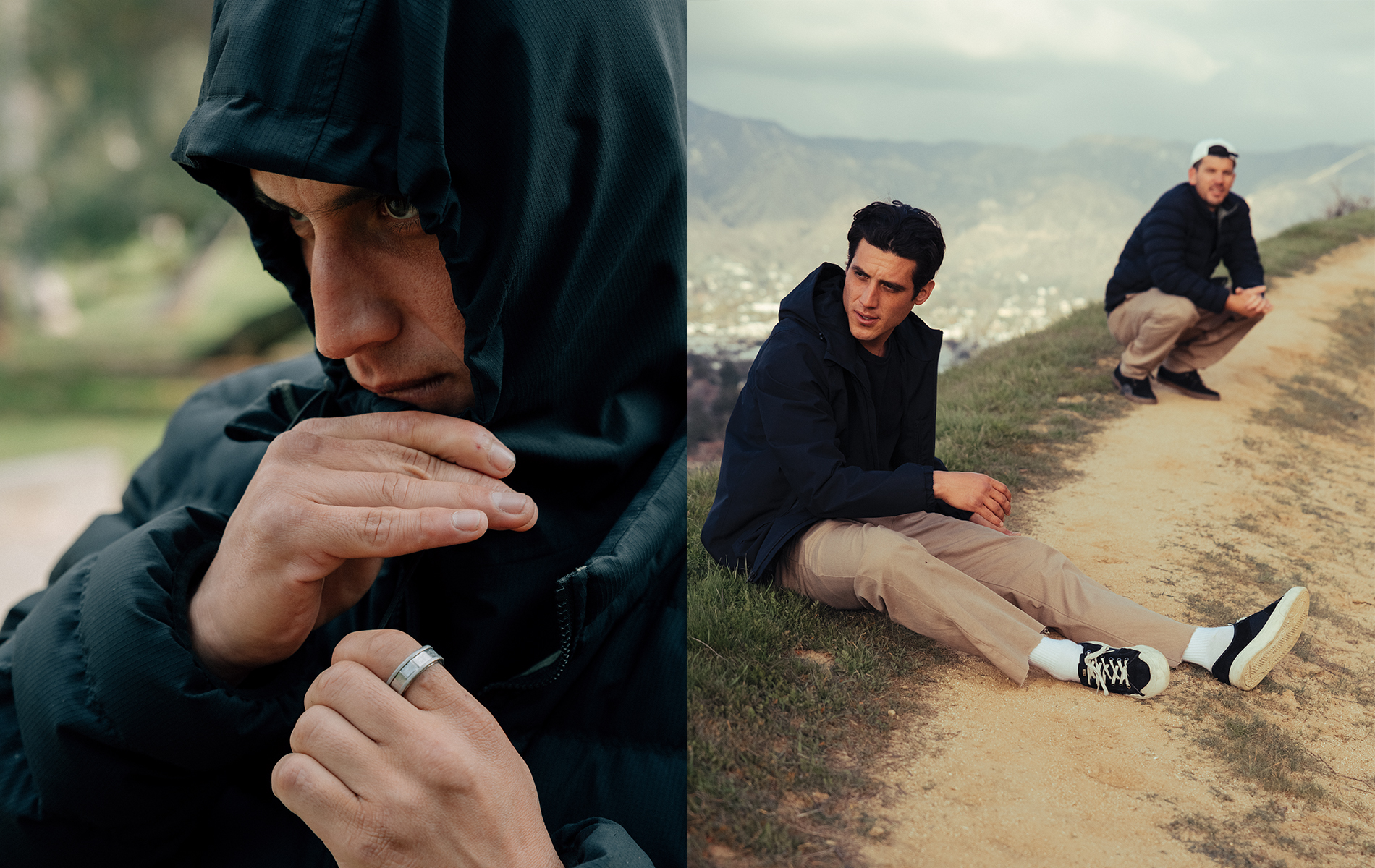
The Globe skate team’s input into the fabrics, fits, and durability can’t be overstated.
Photography
Globe.
Not all surf brands operate like this—Patagonia or Birdwell, for example, have long been lauded and thrived for this different approach, but they are more exceptions than rule.
The Intergovernmental Panel on Climate Change (IPCC) estimates the apparel industry is responsible for 10 percent of global CO2 emissions worldwide. The production process itself is responsible for most of these emissions (that clothes are often shipped or flown around the world several times before they reach their final destination only compounds the issue).
When clothes are only built to survive until a passing trend ends, then the problem is exponentially exacerbated—and greenhouse gas emissions however aren’t the only averse impact the industry has.
A report published in the journal Nature Reviews Earth & Environment estimates 1.5 trillion tonnes of water are used annually by the industry, and clothes are produced using chemicals which not only damage the environment but threaten the health of those producing them and people who reside nearby.
“In one example, a single European textile-finishing company uses over 466g of chemicals per kilogram of textile.” The report reads.

“The wastewater is going out into freshwater streams and polluting the rivers that people are fishing from [and] living from.” One of the journal article’s authors told The Guardian.
Anyway, back to surfing.
It would be unspecific to call what Globe is now undergoing as a “rebrand.” It isn’t a new logo, or a fresh spin on some old styles with a couple threads made from ‘sustainable materials’—this is a complete shift in the way they make clothes and the threads they subsequently offer.
Sustainability is hardly a new term in the surf industry. For years brands have developed an enviro range or something that justified a sustainable label—often these ‘changes’ are more marketing strategy than true shifts in their ethos, pathos, production and supply chain process.
Globe’s shift however is all-encompassing. It isn’t adding a new recycled tee to their line and some organic cotton shorts—they’ve analyzed how all their clothes are produced and made the necessary changes.
What’s important is that they haven’t just changed the way they’re made, but also how long the end product will last, both firmly on your body and relevantly on retailers’ shelves.

Dion Agius.
Photography
Globe
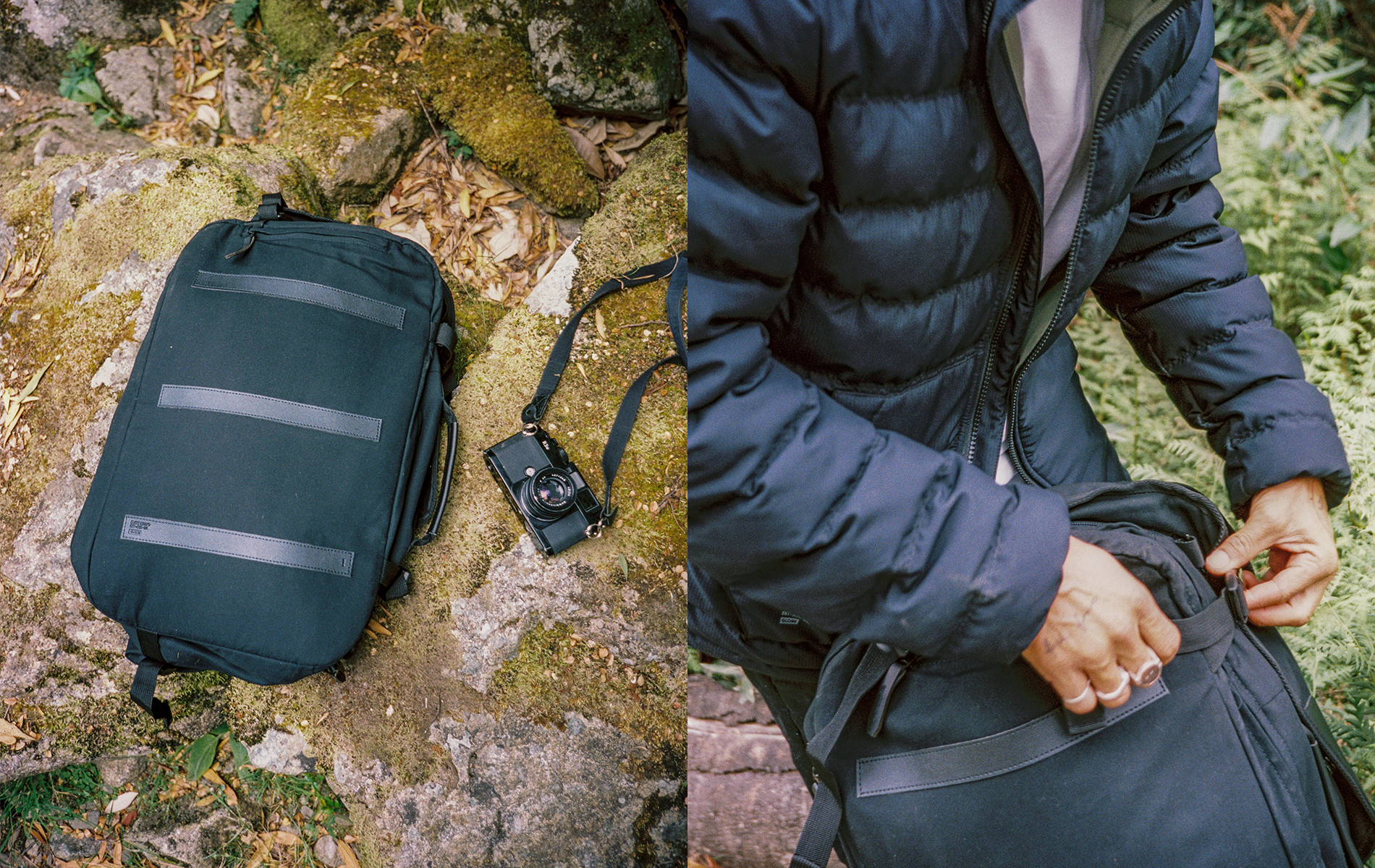
Dion Agius.
Photography
Globe.
“The most sustainable surfboard is one which doesn’t break.” Maurice Cole often says, and the same reasoning can be applied to clothing. Your shirts, pants, and shoes can all be made sustainably, with low environmental footprint, but that means squat when you need to purchase the same item every 6 months.
Globe is aware of this, and now all their range is guaranteed for life; those threads won’t unravel, the soles won’t peel off two months in, and the trunks will last till your gut is too rotund to fit within them. And by the off chance they do, then they will happily replace them.
“Along with our riders, for some time we have been looking at ourselves in the mirror and wanting change,” says Matt Hill. “The environment was knocking at our door rather loudly and demanding action. We’re far from perfect, but we’ve decided to step off the fast fashion treadmill and are focusing on producing quality sustainable clothing for our riders and customers. With Living Low Velocity, we are conscious of our environmental responsibilities and will try to improve our impacts on climate change, water pollution, dangerous chemicals and waste. We are moving in a better direction, at a lower velocity”.
While so many sustainability initiatives seem more Marketing than Matter, Globe’s efforts making genuine and noticeable changes—difficult, but necessary decisions many brands should be considering right now—well then it’s worth being commended for.
You can find out more about Globe’s “Low Velocity” program, here.


Comments
Comments are a Stab Premium feature. Gotta join to talk shop.
Already a member? Sign In
Want to join? Sign Up