



Australia’s Most Surfed Wave Is A Pool, Mex Is Best For Reps, Sri Lanka Is The Home Of Surf Enthusiasm
Insights from 3124 SearchGPS users on the fastest, longest and busiest waves in the world.
What’s better than an educated guess? Hard numbers.
Rip Curl SearchGPS watches have been around since Mick Fanning won his last World Title. The shape of his tan line suggests he’s barely taken his off since.
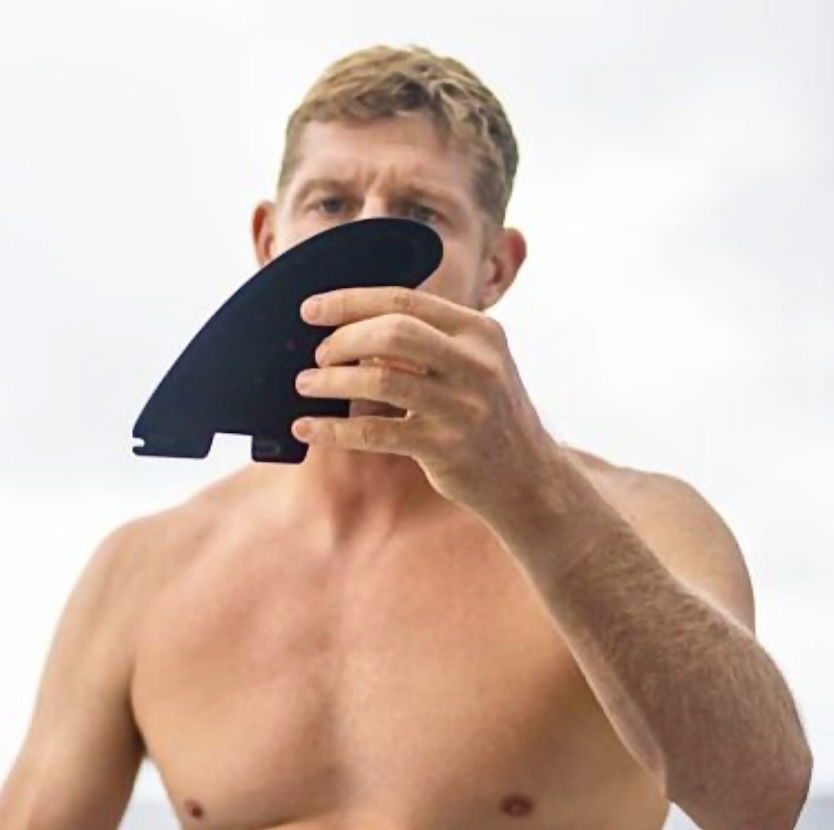
To help promote the world’s first Virtual Pro, Rippy gave us the lowdown on their SearchGPS data from 4 – 14 March, 2023, which means we now hold the omniscient power vested in data-farmers to tell you how fast/slow and often/rarely you actually surf in relation to 3123 other people.

With a sample size of 7969 sessions and 68,008 waves, there’s enough scientific horsepower to make some general observations about the way we surf. But we must first caveat: there are a few limitations.
Pipeline is the most crowded break in the world (per square meter) in the Northern Hemisphere’s winter, but in March when it is less consistently premium, you might catch 50 waves out there without being hassled by a single Hawaiian heavy. Waves are seasonal.
Other confounding variables are the odd foiler, goat boat and/or SUP. We’ve excluded any data we felt didn’t add up, or in instances where the sample of user data was too slim. Finally, some regions (e.g. Torquay – where Rip Curl’s HQ is based) might over-index on SearchGPS wearers. We eliminated that too.
Think of it as a snapshot of a moment in time, with a really slow shutter that takes 11 days, when the earth was on a particular axis, at a particular stop on its path to orbiting the sun in March, 2023.
Enough eight-mileing, let’s play god.
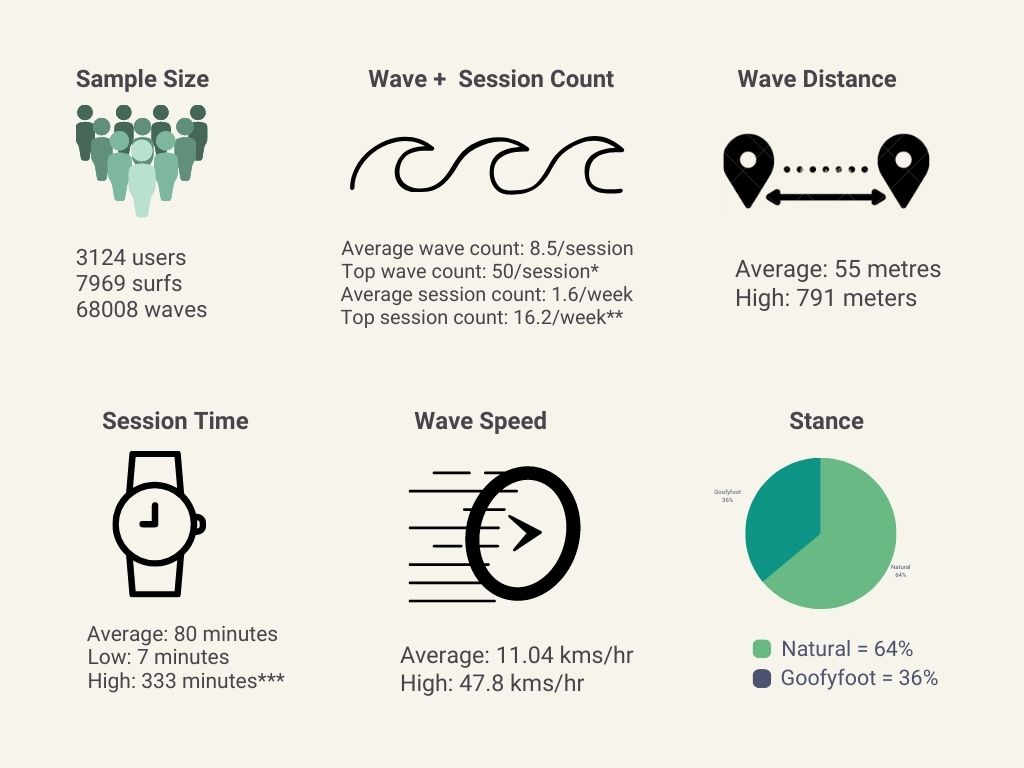
- The split on natural:goofy was 64% and 36% respectively, closely mimicking ‘the rule of thirds’
- The longest wave surfed was 791 meters recorded at Snapper Rocks in Australia
- *The highest single wave speed was 47.8kms/hr recorded at Boings in Victoria, Australia
- ** recorded in Mentawai Islands, Indonesia
- *** recorded at Uluwatu, Bali
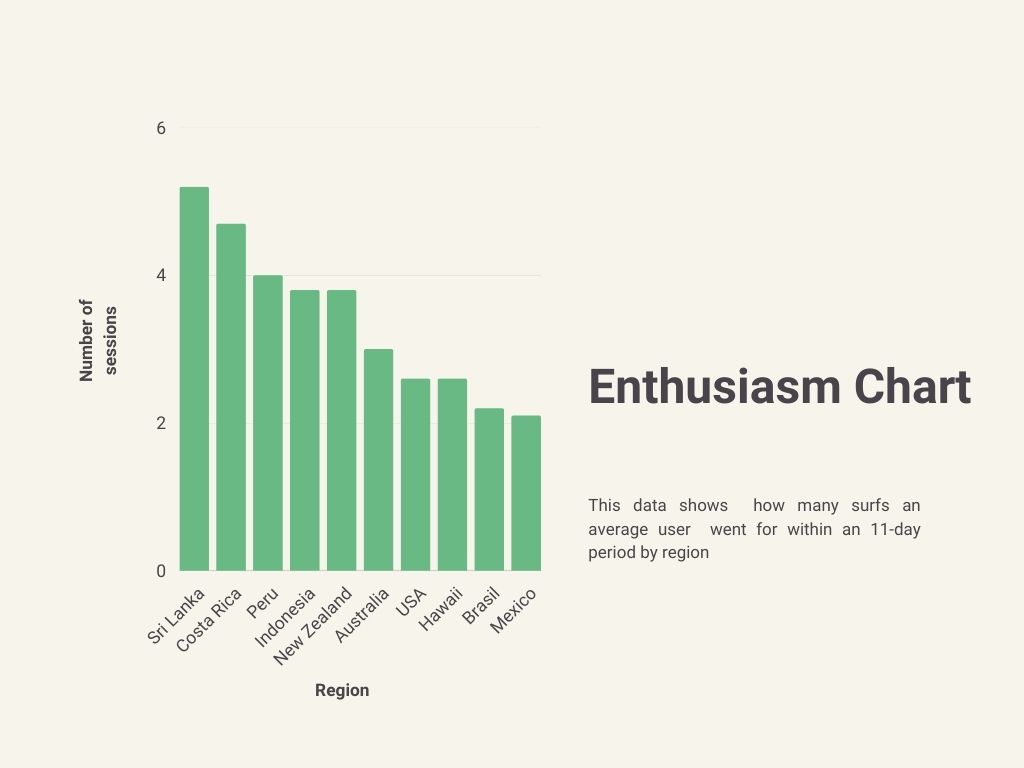
The Enthusiasm Chart is based on surfer:session ratio. In other words, for every one surfer in a region, how often many sessions did they have over an 11-day period? Ones appetites to go surfing is colloquially coined ‘froth’ in the lingo, and Sri Lankan users were by far the frothiest averaging 5.2 surfs per user.
Mexico was actually ranked the least frothiest region, with users reporting just 2.1 sessions over the window. This is interesting because it ranked first in the world in terms of wave count per user (see below), and may simply suggest Mexico gives you more bang for your buck. You can binge on waves and then sip Micheladas until the swell gets you squirrely again.
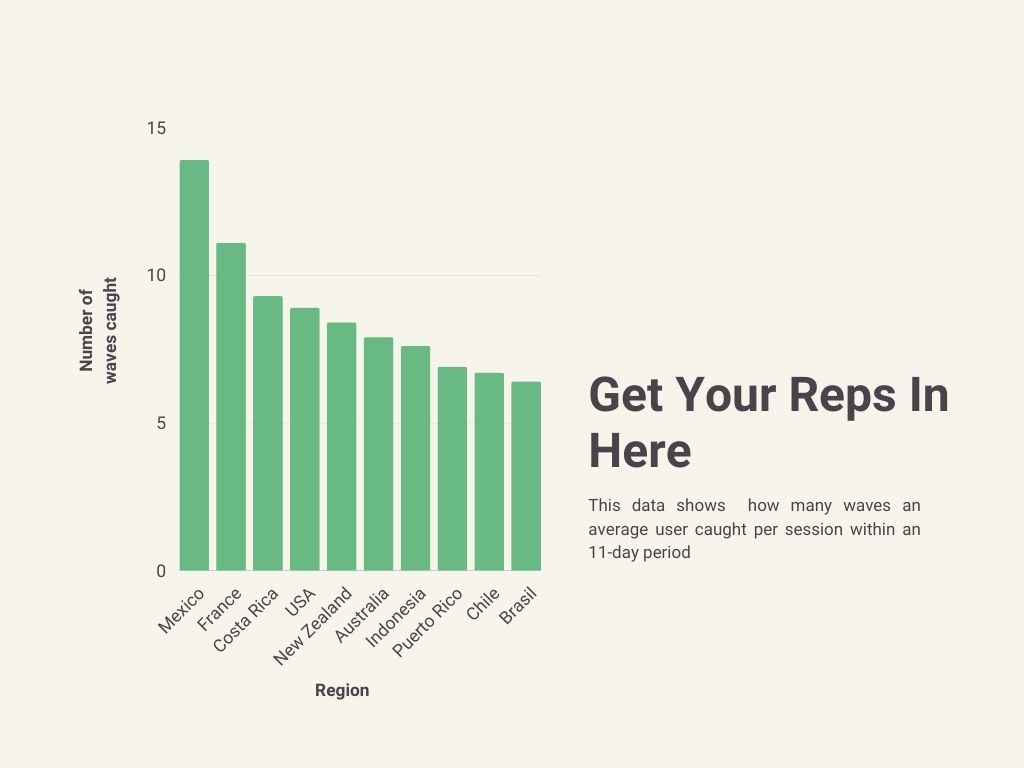
Based on session:wave ratio, this data reflects users wave count. Users in Mexico ranked first, recording 13.9 waves per session. Based on the average session time of 80 minutes that works out to be a wave roughly every 5.75 minutes. Ergo: Get your reps in Mex.
A surprising result is that Brazil ranked last in terms of wave count, averaging only 6.4 waves per session. This was certainly not the case for Italo Ferreira, who caught a wave every 3.5 minutes filming Stab in the Dark.
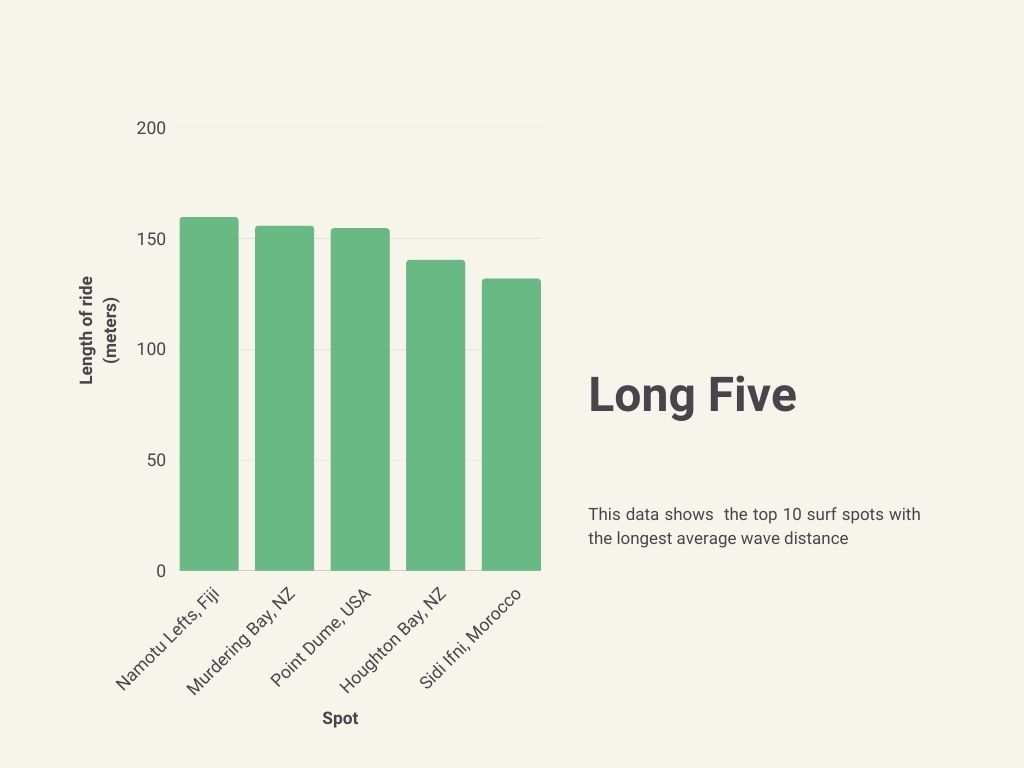
Funnily enough, the winner of Rip Curl’s Virtual Pro competition will only be staying a stones throw from the wave that recorded the longest average distance per user, Namotu Lefts in Fiji. If you want tubing leg burners, kava and warm tropical water for nothing, buy a SearchGPS and a time machine and win the Virtual Pro.
Worth noting is that New Zealand has two waves within the top 5: Murdering Bay and Houghton Bay, a very suitable cold water alternative.
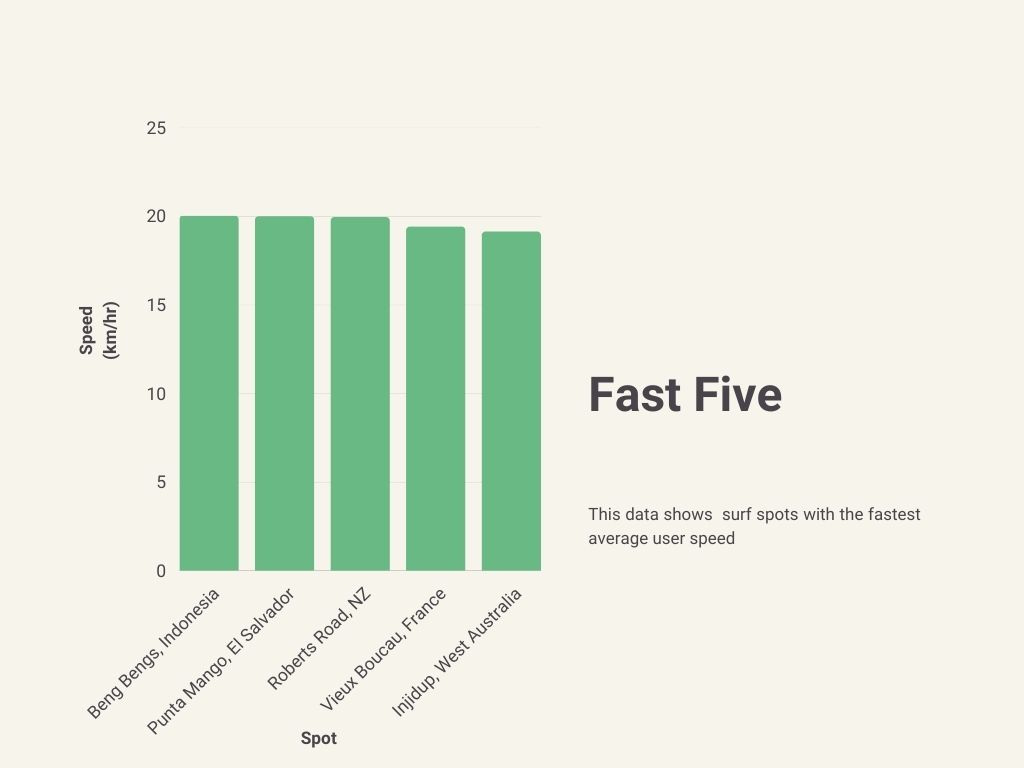
Beng Bengs in the Mentawais topped the charts here with users averaging 20.03 kms/hr. Although Snapper, Desert Point, J-Bay immediately spring to mind as candidates for the fastest waves, none of them made it into the top 10. Keep in mind, the SearchGPS is not factoring in top-to-bottom surfing, only your start and finish point as the crow flies.
While less than 1 km/hr split first and fifth, every wave in the Fast Five recorded average speeds nearly double that of the worldwide average speed – 11.04 km/hr.
For reference, the fastest speed Mick recorded in his SITD was 30.1 km/hr.
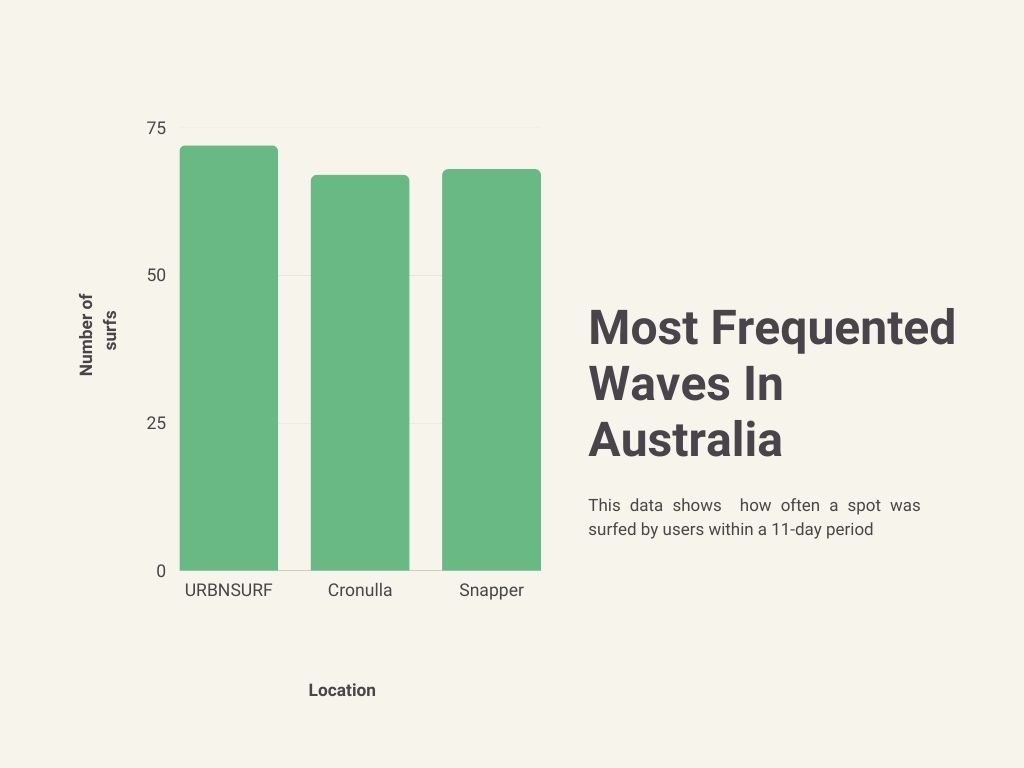
Frequented and population are different. Frequency measures the total number of sessions recorded at a spot within the time frame (i.e. one user may surf multiple times). By contrast, population measures the number of surfers at a spot within a certain timeframe.
Snapper was the most populated wave in Australia (39 users) and the second most frequented (68 sessions). URBNSURF Melbourne had the second biggest population (31 users) but was the most frequented (72 sessions). Helped along by their night sessions.
Cronulla had the third largest population (28 users) and was the third most frequented (67 sessions).
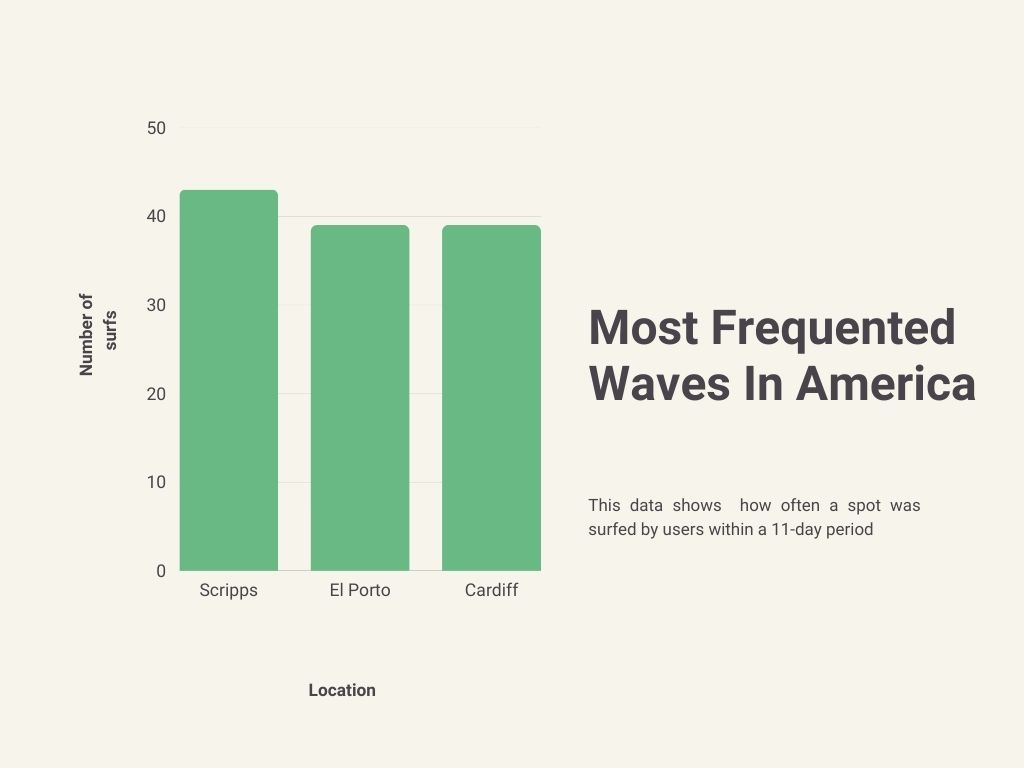
Scripps, El Porto and Huntington Beach all tied for first with the highest population of users (21 each). Huntington however, did not make the top three most frequented waves, recording only 33 sessions in total. That means only half of them surfed it again within an 11-day period. Perhaps the Huntington hop does get old?
By contrast, the small but mighty Cardiff Reef with only 10 users recorded 39 sessions, making it tied with El Porto for the second most frequented wave in the USA. That makes Cardiff’s user:session ratio almost 2.5x that of Huntington, and the most enthusiastic wave (based on user:session ratio) in the USA.
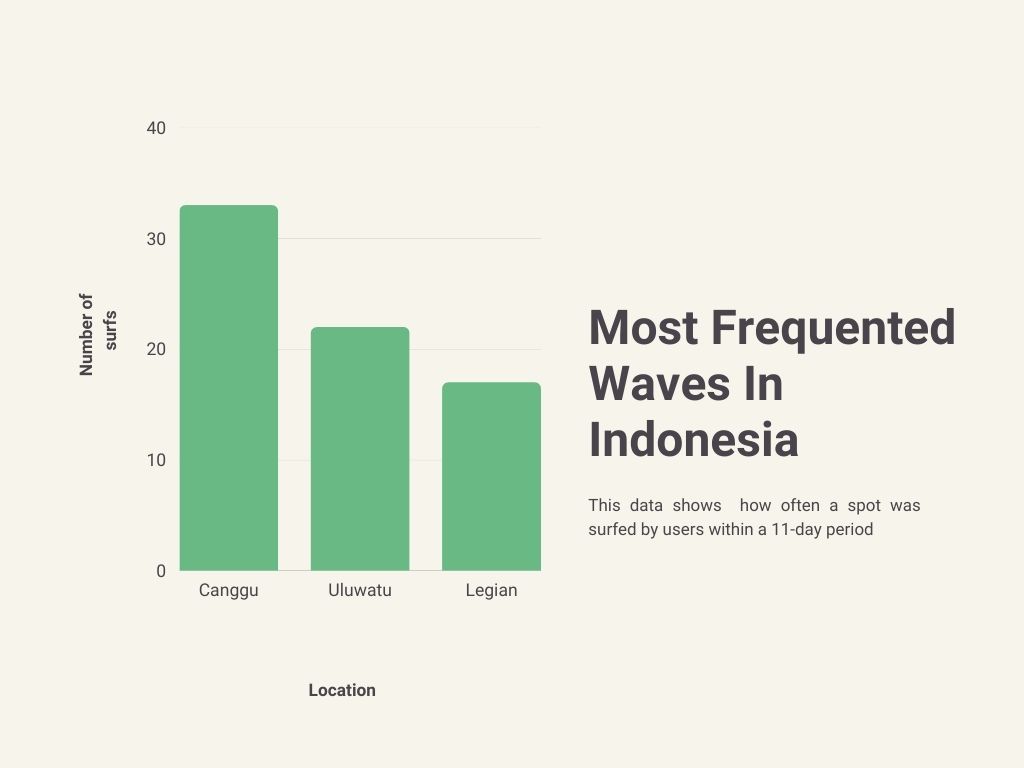
Canggu recorded the highest population of users (12) and the highest number of sessions (33). This likely speaks to its user-friendliness as a beach break that accommodates pros and beginners alike. Coming second was Uluwatu with 11 users recording a total of 22 sessions – meaning the average user surfed the lefthand reef break twice over the window.
Not seen in the graph is the frothiest break in Indonesia, Monkeys in the Telo Islands. Two users counted 15 sessions at the A-frame, meaning it was surfed 3.75x more often than Uluwatu based on the proportional number of users.
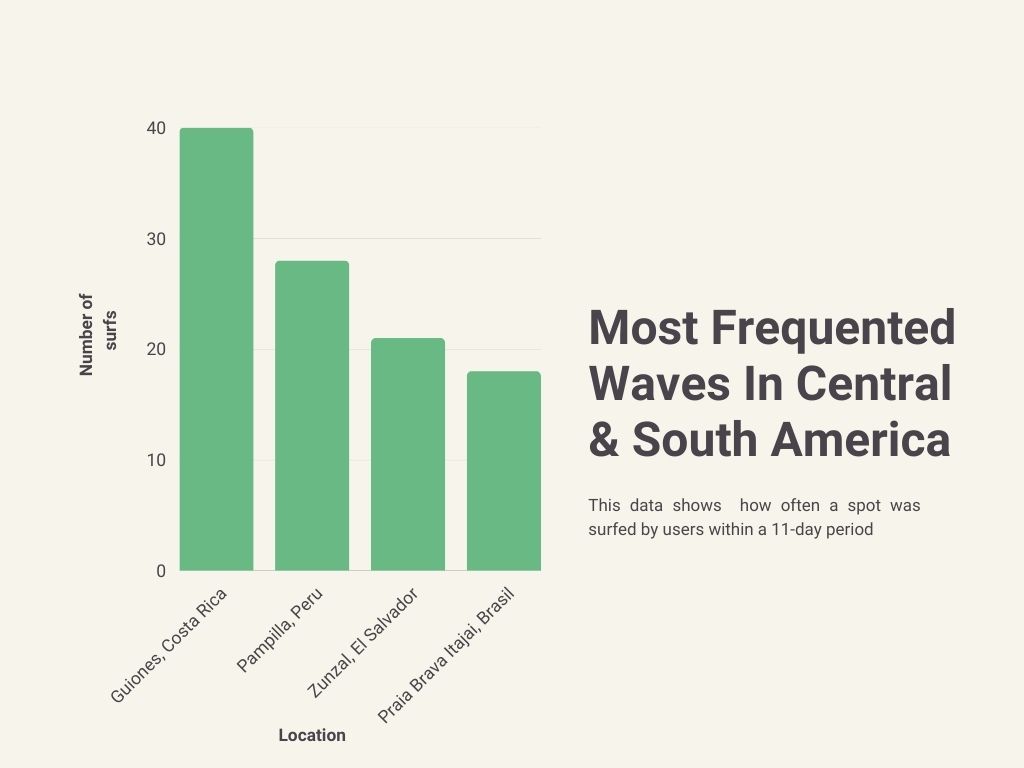
Costa Rica’s Guiones was the most populated and frequented surf break in all of Central and South America, recording 10 users and 40 sessions. Equally populated but far less frequented was Peru’s Pampilla at 24 sessions.
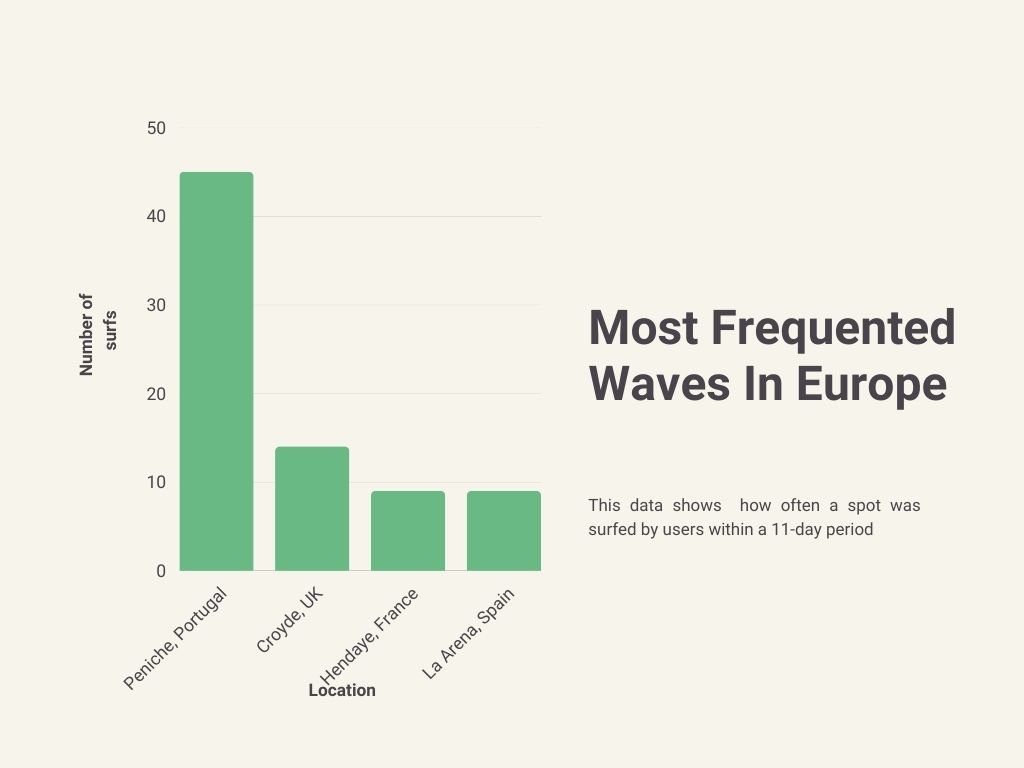
The spread of scores on this graph reflects Spain, Portugal, the UK, and France’s most surfed breaks respectively. In other words, these are not the top four most frequented breaks across the entire EU, rather they are each country’s most surfed wave. I’ve done this because Portugal smoked every other region in terms of users, undoubtedly inflated by the coinciding CT event.
Topping the charts in Portugal was Peniche (including both breaks: Parede and Lagide) counting 25 users and 45 sessions in total.


Comments
Comments are a Stab Premium feature. Gotta join to talk shop.
Already a member? Sign In
Want to join? Sign Up