



Designer reefs are surfing’s happy future!
Andy Mckinnon couldn’t believe it. A pile of specially made sand bags bound together and plonked off the coast of Narrowneck on Australia’s Gold Coast had actually created something special. “For a while there, six months, there was a pumping reefbreak,” recalls Andy, who’s part of the Gold Coast City Council’s Surf Management Plan Advisory Committee. “Munga (former pro surfer, Michael Barry) was raving about it.” Andy surfed it too. It pumped. On a big nor-east swell, a boiling take off would send you on a run down a long, rippable left. At other times it offered a fun A-frame rip bowl. The reef was made of a series of geotextile sand bags, bound together in the shape of a triangle, with a gap in the middle to let the water run back out and create the rip bowl. There had been conjecture over the direction of the reef (Andy claims it was placed facing the wrong direction), but it didn’t matter. It disintegrated quickly. Fisherman’s anchors ripped the bags to bits, the ocean had its way with it, and it started to sink. It was soon producing little more than mush burgers. The fact it created a surfable wave at all was largely a coincidence. The reef’s primary function was to protect beachside properties from coastal erosion, which it succeeded in. In fact, there has never been a successful attempt to create reef solely for the purpose of producing pumping waves (New Zealand-based company, ASR, produced three “multi-purpose reefs” throughout the mid-to-late naughties in New Zealand, the UK and India, none of which lived up to expectations when it came to waves). That might change if one of the Surf Management Advisory Committee’s plans are realised. The group (which Andy is a part of) is responsible for helping the Gold Coast City Council implement their all-important surf management plan. Its charter is to limit overcrowding and at the forefront of the plan, says Andy, is creating an artificial reef. “The Gold Coast City council is looking at building five artificial reefs over five or more years,” says Andy, revealing that Palm Beach is being looked at for the location. Part of the solution to spreading out the crowds was initially pinned to wavepools. The Gold Coast was earmarked as the site for Australia’s first stadium but it never eventuated (Western Australia looks as though it will get the nod instead). The various prototypes that have sprung up around the world, meanwhile, have left the surfing public morale-crushingly underwhelmed. There’s a simple explanation for why this is. “Wavepools create different types of waves (to the ocean),” explains James Lewis, senior metocean engineer at the engineering company, Royal HaskoningDHV. “They have a different shape, different energy and a different sensation (to the ocean).” Dillon Perillo for Neo Tokyo. It all comes down to how they are created: “Either by an abrupt displacement in the water column (Abu Dhabi/Kuala Lumpur) or by continuous driving force like a boat wake (Wavegarden).” None of which are comparable, at this point, to the real mccoy, though that may change. “From what I’ve seen, there’s been some recent research changing the way they’re being produced, but there needs to be more time spent on tailoring the waves specifically for surfing,” says James. In the meantime, wouldn’t it make more sense to simply add to the wave creation technology that’s already there? By creating a few more world class spots? James, who is a former president of Burleigh Boardriders, is currently undertaking a feasibility study on an artificial surf-reef in Albany, in Australia’s South West, in his role with Royal HaskoningDHV. He puts down a good argument for artificial reefs over wavepools. “I think working with nature is a more responsible and cost-effective approach than trying to create it in a pool,” he says. “The energy to create the waves is already available (in the ocean), there is no need for ongoing maintenance or staff. The waves are going to come, you just have to build a structure to capture them.” He also points to the several partially-manmade breaks already in existence; the likes of the Superbank, South Straddy, D’Bah and “positive structure interactions,” such as Iluka Breakwall and Sebastian Inlet (USA). Brendon Gibbens for Neo Tokyo. One bonus when it comes to artificial reefs is there are thousands of ready-made prototypes to be copied. It seems simple enough. Rip off an existing template (reef), drop the structure into the water in the desired shape, and let the magic happen. Not exactly, says James. When it comes to reefs, the more you know, the more you realise you don’t know. “Natural reefs like Teahupoo, for example, have been made by water running out of a valley over 1000s of years and carving a gap in the reef,” he says. “The roughness, small valleys between coral heads, and little inconsistencies in the reef structure is just part of what the makes the waves breaking on them so perfect.” “Some of the problems with previous materials (used to make reefs) is they have been long, smooth structures. The water speeds up as it runs over the reef, creating strong currents which has the affect of scouring holes around the structure (if it’s on sand), kind of like how if you stand in the shorebreak, your feet get buried in the sand when the water drains out,” he says. You also have to consider the sort of coastline you’re dropping the reef into. Conner Coffin for Neo Tokyo. “There is a general rule of thumb that the length of the structure needs to be approximately half the wave length (period) of the waves,” says James. “So for example, nine-second periods are the average on the Gold Coast, whereas on the south coast of West Oz it’s around 12 seconds, so either way you’re looking at a minimum structure length of at least 70 to 100m in order for waves to break under average conditions. Usually the further out you go,
Andy Mckinnon couldn’t believe it. A pile of specially made sand bags bound together and plonked off the coast of Narrowneck on Australia’s Gold Coast had actually created something special. “For a while there, six months, there was a pumping reefbreak,” recalls Andy, who’s part of the Gold Coast City Council’s Surf Management Plan Advisory Committee. “Munga (former pro surfer, Michael Barry) was raving about it.” Andy surfed it too. It pumped. On a big nor-east swell, a boiling take off would send you on a run down a long, rippable left. At other times it offered a fun A-frame rip bowl.
The reef was made of a series of geotextile sand bags, bound together in the shape of a triangle, with a gap in the middle to let the water run back out and create the rip bowl.
There had been conjecture over the direction of the reef (Andy claims it was placed facing the wrong direction), but it didn’t matter. It disintegrated quickly. Fisherman’s anchors ripped the bags to bits, the ocean had its way with it, and it started to sink. It was soon producing little more than mush burgers.
The fact it created a surfable wave at all was largely a coincidence. The reef’s primary function was to protect beachside properties from coastal erosion, which it succeeded in.
In fact, there has never been a successful attempt to create reef solely for the purpose of producing pumping waves (New Zealand-based company, ASR, produced three “multi-purpose reefs” throughout the mid-to-late naughties in New Zealand, the UK and India, none of which lived up to expectations when it came to waves).
That might change if one of the Surf Management Advisory Committee’s plans are realised. The group (which Andy is a part of) is responsible for helping the Gold Coast City Council implement their all-important surf management plan. Its charter is to limit overcrowding and at the forefront of the plan, says Andy, is creating an artificial reef.
“The Gold Coast City council is looking at building five artificial reefs over five or more years,” says Andy, revealing that Palm Beach is being looked at for the location.
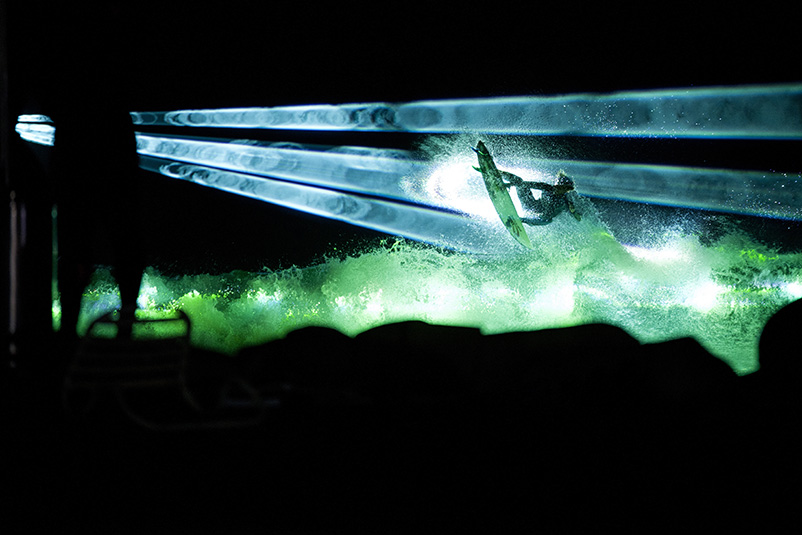
Part of the solution to spreading out the crowds was initially pinned to wavepools. The Gold Coast was earmarked as the site for Australia’s first stadium but it never eventuated (Western Australia looks as though it will get the nod instead). The various prototypes that have sprung up around the world, meanwhile, have left the surfing public morale-crushingly underwhelmed. There’s a simple explanation for why this is.
“Wavepools create different types of waves (to the ocean),” explains James Lewis, senior metocean engineer at the engineering company, Royal HaskoningDHV. “They have a different shape, different energy and a different sensation (to the ocean).”
Dillon Perillo for Neo Tokyo.
It all comes down to how they are created: “Either by an abrupt displacement in the water column (Abu Dhabi/Kuala Lumpur) or by continuous driving force like a boat wake (Wavegarden).” None of which are comparable, at this point, to the real mccoy, though that may change.
“From what I’ve seen, there’s been some recent research changing the way they’re being produced, but there needs to be more time spent on tailoring the waves specifically for surfing,” says James.
In the meantime, wouldn’t it make more sense to simply add to the wave creation technology that’s already there? By creating a few more world class spots? James, who is a former president of Burleigh Boardriders, is currently undertaking a feasibility study on an artificial surf-reef in Albany, in Australia’s South West, in his role with Royal HaskoningDHV. He puts down a good argument for artificial reefs over wavepools.
“I think working with nature is a more responsible and cost-effective approach than trying to create it in a pool,” he says. “The energy to create the waves is already available (in the ocean), there is no need for ongoing maintenance or staff. The waves are going to come, you just have to build a structure to capture them.”
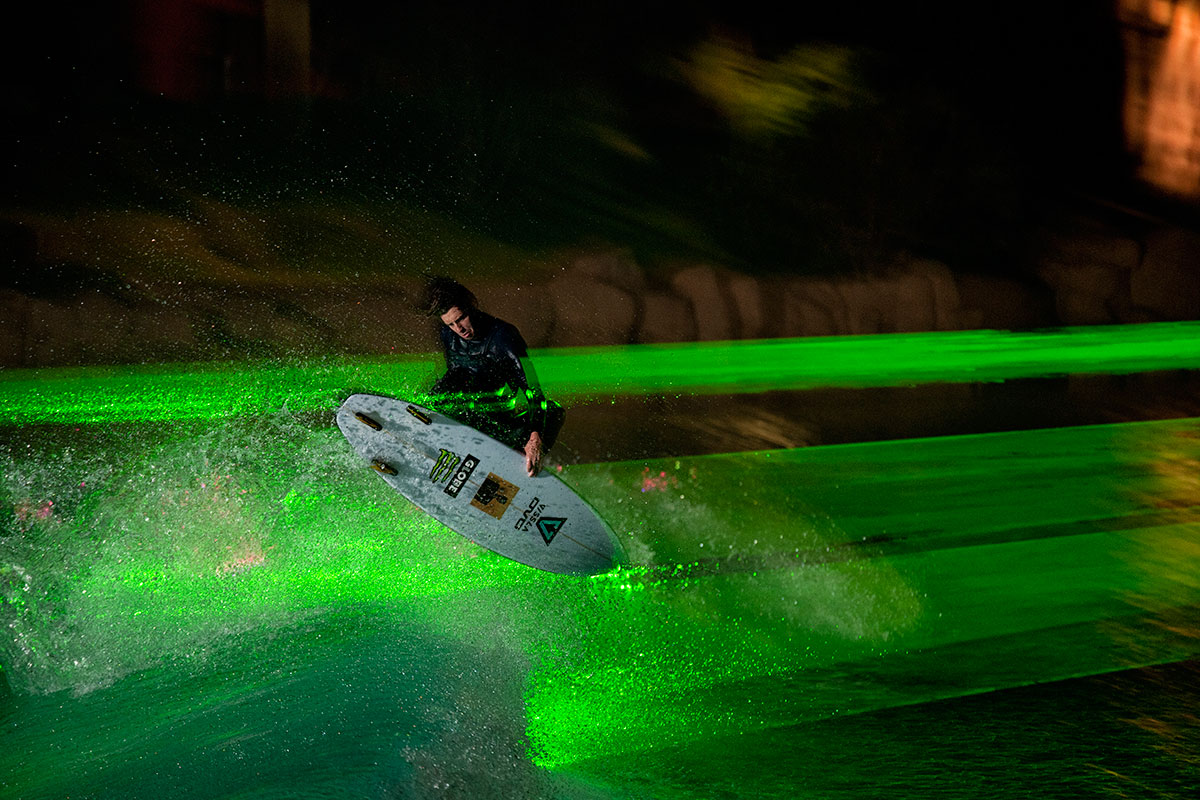
He also points to the several partially-manmade breaks already in existence; the likes of the Superbank, South Straddy, D’Bah and “positive structure interactions,” such as Iluka Breakwall and Sebastian Inlet (USA).
Brendon Gibbens for Neo Tokyo.
One bonus when it comes to artificial reefs is there are thousands of ready-made prototypes to be copied. It seems simple enough. Rip off an existing template (reef), drop the structure into the water in the desired shape, and let the magic happen. Not exactly, says James. When it comes to reefs, the more you know, the more you realise you don’t know.
“Natural reefs like Teahupoo, for example, have been made by water running out of a valley over 1000s of years and carving a gap in the reef,” he says. “The roughness, small valleys between coral heads, and little inconsistencies in the reef structure is just part of what the makes the waves breaking on them so perfect.”
“Some of the problems with previous materials (used to make reefs) is they have been long, smooth structures. The water speeds up as it runs over the reef, creating strong currents which has the affect of scouring holes around the structure (if it’s on sand), kind of like how if you stand in the shorebreak, your feet get buried in the sand when the water drains out,” he says.
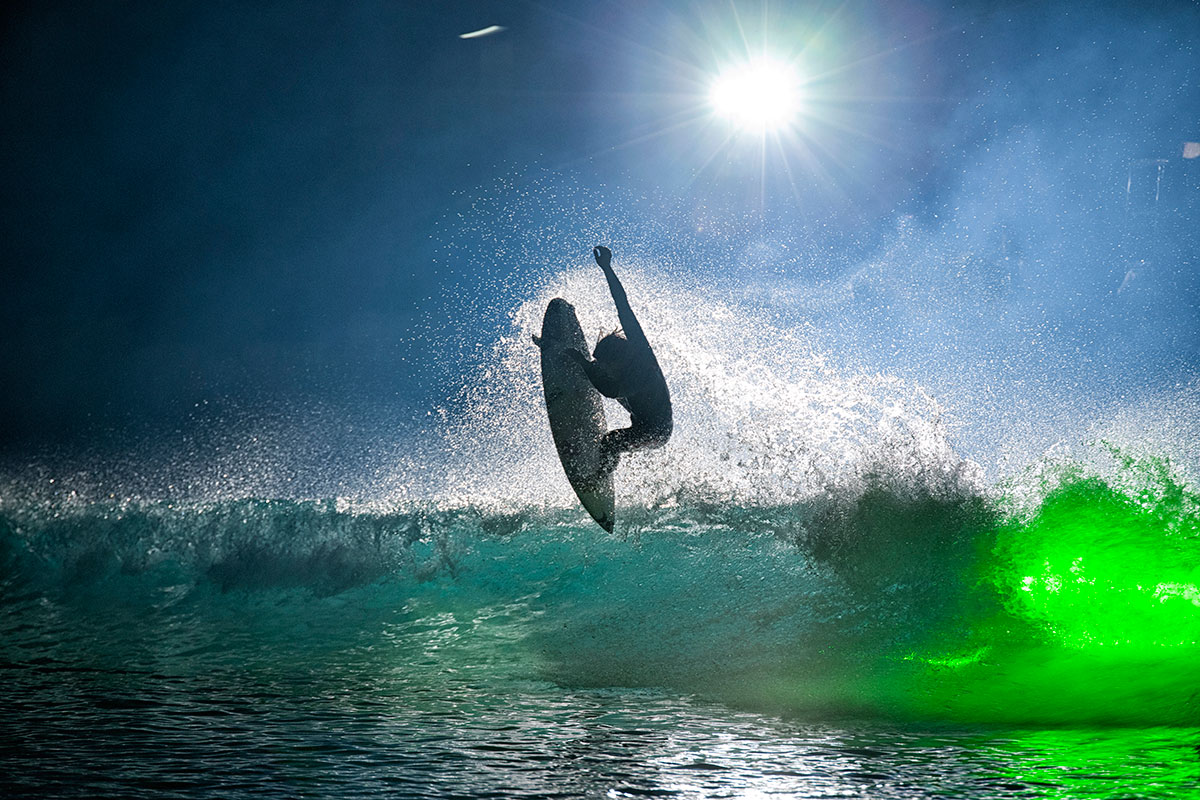
You also have to consider the sort of coastline you’re dropping the reef into.
Conner Coffin for Neo Tokyo.
“There is a general rule of thumb that the length of the structure needs to be approximately half the wave length (period) of the waves,” says James. “So for example, nine-second periods are the average on the Gold Coast, whereas on the south coast of West Oz it’s around 12 seconds, so either way you’re looking at a minimum structure length of at least 70 to 100m in order for waves to break under average conditions. Usually the further out you go, the deeper the water and the higher the structure will need to be in order for waves to break.”
The deeper you put it and the bigger it needs to be, the more complicated and expensive things begin to get. There is no date on when we’ll see results but it really makes you think.
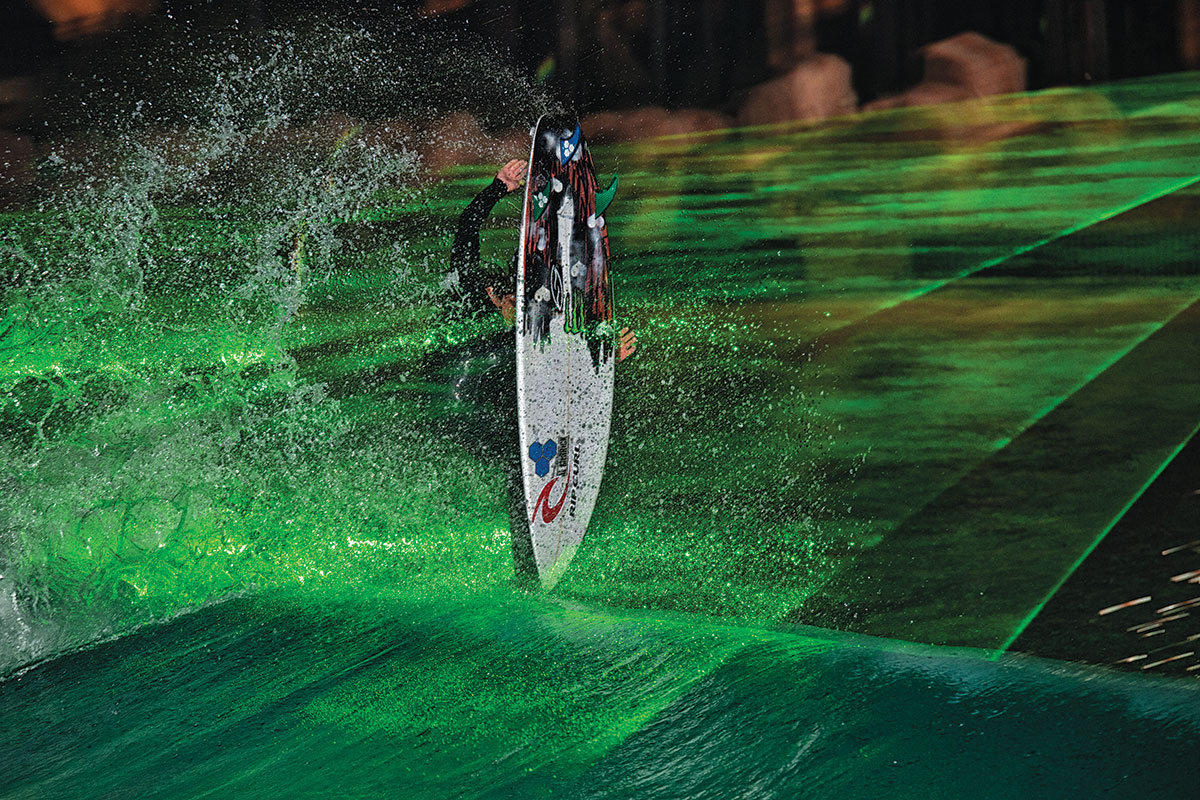
And if that’s what it takes to create something from scratch, what would be the possibility of working backwards? Say in the famously lax Indonesia, where a couple of strategically placed dynamite sticks might be the difference between a bone-dry closeout and the next Macaronis.
“Mate, there are hundreds of reefs and setups everywhere,” answers Mentawaian surf charter captain, Brendan Sewell when we put it to him. “But instead of blowing up the reef I reckon it needs filling in. This would be a better alternative and less damaging to the environment,” he says. Now we’re talking.
Dillon Perillo for Neo Tokyo.


Comments
Comments are a Stab Premium feature. Gotta join to talk shop.
Already a member? Sign In
Want to join? Sign Up