



The Bizarre (& Forgotten) Art Of Stand-Up Bodyboarding
While his contemporaries lay flat or dropped knee, Chris Taloa chose to stand AND deliver. So, what extinguished the bright flame of SUB’ing?
If you ask Chris Taloa, he’ll tell you the death of stand-up bodyboarding wasn’t from lack of interest. It was killed off by the bodyboarding core, because it posed a threat.
“To me it was like, why don’t we stab this thing in the back now, so we don’t have to deal with this later?” he begins.
“Because bodyboarding could have gone in a totally different direction and I don’t think the guys pushing it at the time wanted it to go like that.”
Chris, who was part of the pioneering brigade of stand-up bodyboarders, recalls the exact moment it was assassinated. It was 1996 and he was competing at the World Games in Brazil. Stand-up bodyboarders were, at that point, still competing alongside prone riders (lying down) and drop knee’ers in the same division. Controversy had erupted in the lead up over how to score the stand-ups. Chris and his main rival, Hawaiian Danny Kim, had been consistently receiving scores in the excellent range for their wild blend of surfing manoeuvres (hacks, roundhouses, floaters) done standing up on bodyboards. Then, the tap was suddenly turned off.
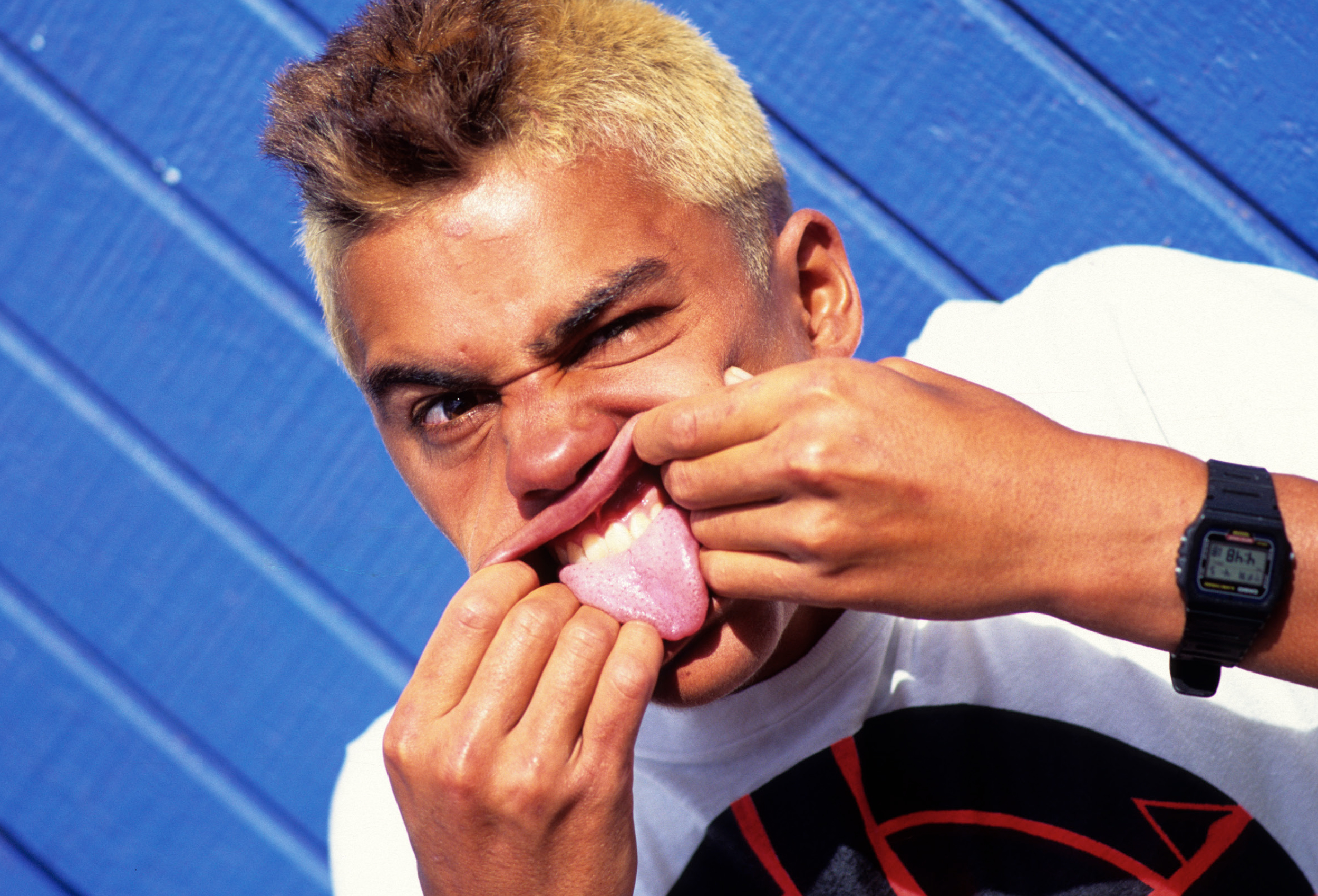
“He was always outspoken – super friendly, but really opinionated,” recalls photographer Brian Bielmann of Chris in the 90s. “In the lineup, he was there as a bodyboarder, but… standing his ground. He took pride in what he did. This was back in the days when a lot of guys were down on bodyboarding. He was always right there to fucking stand his ground, get in a fight if he had to.”
Photography
Hank Photo
“In my first heat (at the World Games), I’d take off backside and do four huge roundhouse snaps into a full backside reverse 360, and I didn’t hear my scores,” Chris recalls. “(The judges) didn’t get it. But we had a Hawaiian judge, who was actually from Brazil, and he understood everything they were saying. He came and told me that they took my score sheets and had a huge fight about it in the judges tent. A couple of the international judges were like ‘fuck you, that guy is ripping,’ and the other ones were like ‘fuck you, that’s not bodyboarding.’”
Chris couldn’t have disagreed more. To him, standing on your craft was the pinnacle of the sport – “the angel on top of that motherfucking Christmas tree,” as he puts it. “I believed that the board should be used for everything. Drop knee that fucker, prone that son of a bitch, and stand up – whatever the fuck the wave qualifies for you to do.”
But, the game had changed. As quickly as it had arrived, stand-up bodyboarding was gone, thrown onto a fluorescent scrapheap of discarded 90s action sports, alongside rollerblading, extreme frisbee and grip ball.
“I could have conformed and laid on my belly like everyone else and done all that shit but I didn’t wanna,” says Chris.
Stand-up bodyboarding began as a uniquely Hawaiian tradition, with roots as deep as the original Polynesians who took to the water on wooden finless alaias. Fast forward to the modern surf age, and the bodyboard came to represent the modern day alaia to many of Hawaii’s impoverished natives. It was the people’s craft.
“(Stand up bodyboarding) really had a chance to form out there, kind of in the hoods of the west side of Oahu,” says Chris. “It was the drier, more uninhabitable part of the island and they kinda got forced in that direction during the colonisation times. You get a bunch of Hawaiians who love to surf, but couldn’t afford the surfboards, so they would ride anything they could get their hands on. They didn’t need fins, they were just dying to ride anything. Bodyboards were cheaper than surfboards.”
With a retail price between (US) $50 and $60, the Morey Mach 7 became the weapon of choice for an entire generation of Hawaiians – Chris among them. Compared to a $300-400 fibreglass surfboard, which you were likely to snap within a year in the crushingly heavy waves of Oahu, the bodyboard was a no-brainer.
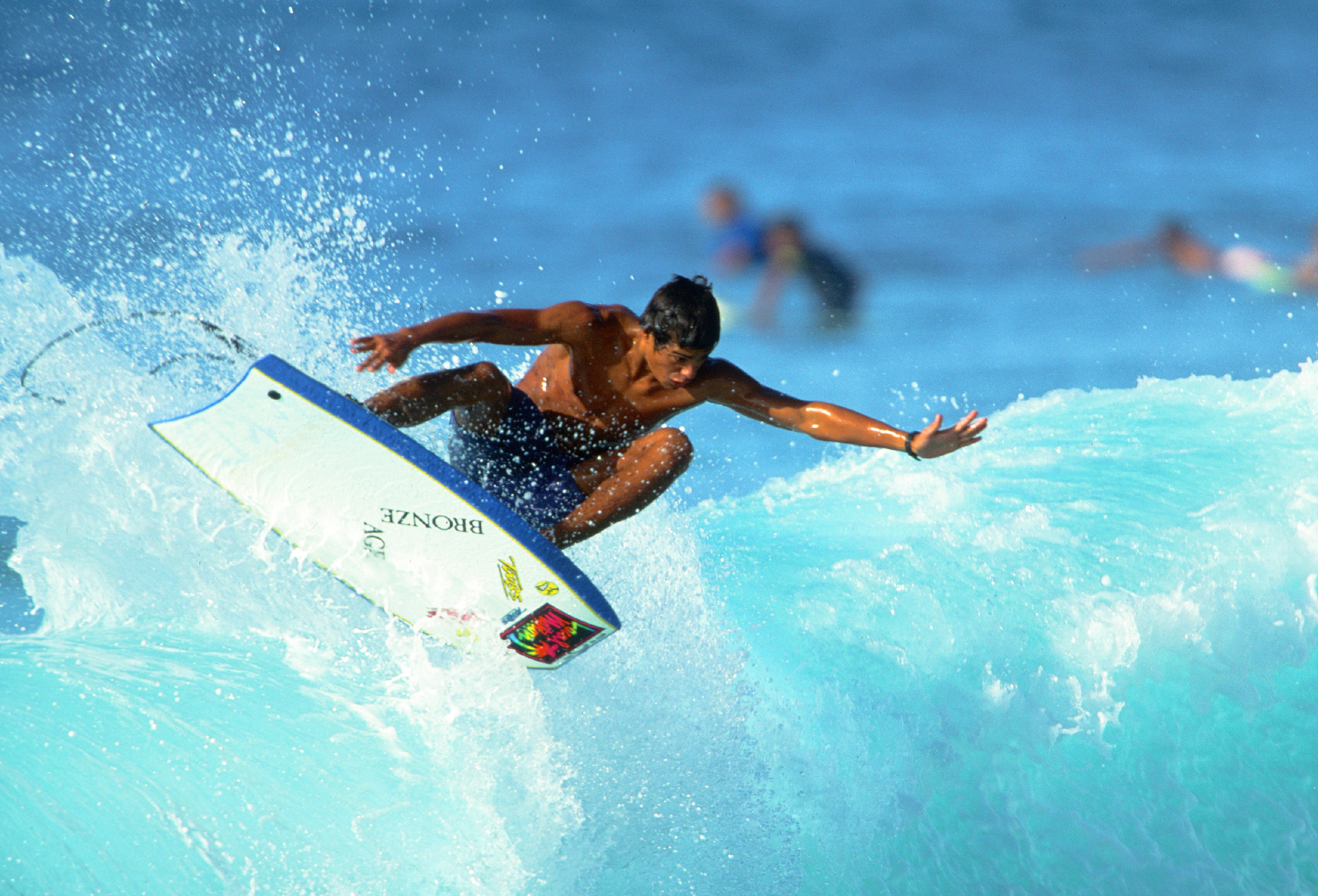
“Chris would fricken rip,” says Bielmann matter-of-factly. “He would ride Off The Wall really good, and that was his forte; not small waves per se, but not big, big waves – like, he didn’t really stand up at Pipe, obviously. But he loved Backdoor and Off The Wall and got killer bombs, a killer barrel and then a killer cutback at the end of the wave – standing up.”
Photography
Brian Bielmann
Meanwhile, the versatility of the board – along with its easy means of transportation – added to its appeal. When it was big, unruly and hollow, you rode the bodyboard on your stomach (prone). When it was perfect, hollow and rippable you rode drop knee. And when it was down-the-line, small and fat – or perfect and hollow – you stood up. Sometimes you did all three in the one session. Often Hawaiians would start out standing up on the bodyboard until it creased and became too flexible, at which point they’d ride it prone.
Chris grew up in the intimidating arena of 1980s and 1990s Wahiawa, in Oahu’s central-west. His youth was shrouded in violence and dysfunction, but the ocean was always an outlet and a movement lead by the stand-up bodyboarding pioneer Danny Kim, from the West Side, was under way.
“I won’t even start with that fucken freak,” says Chris. “Danny Kim had the weirdest, most crazy abilities and styles. I looked up to him like his shit didn’t stink. That guy could blow a fart in my face and leave sacko marks all over me and I wouldn’t give a shit. He was a hero of mine.”
Oahu’s island politics split the surfing community down the middle. The two groups were called Town and Country (also the name of a Hawaiian surfboard label); townies being those from the semi-urban suburbs along the south coast, while Country was the North Shore aka the Seven Mile Miracle, home to Pipeline, Backdoor, Off The Wall, Sunset, and several other world class waves.
The North Shore, says Chris, tended to be more affluent than other areas of the island and was populated by the offspring of the first American mainland surfers who arrived on the rock. Chris split his time between there and the rest of the island, his movements dictated by swell and wind.
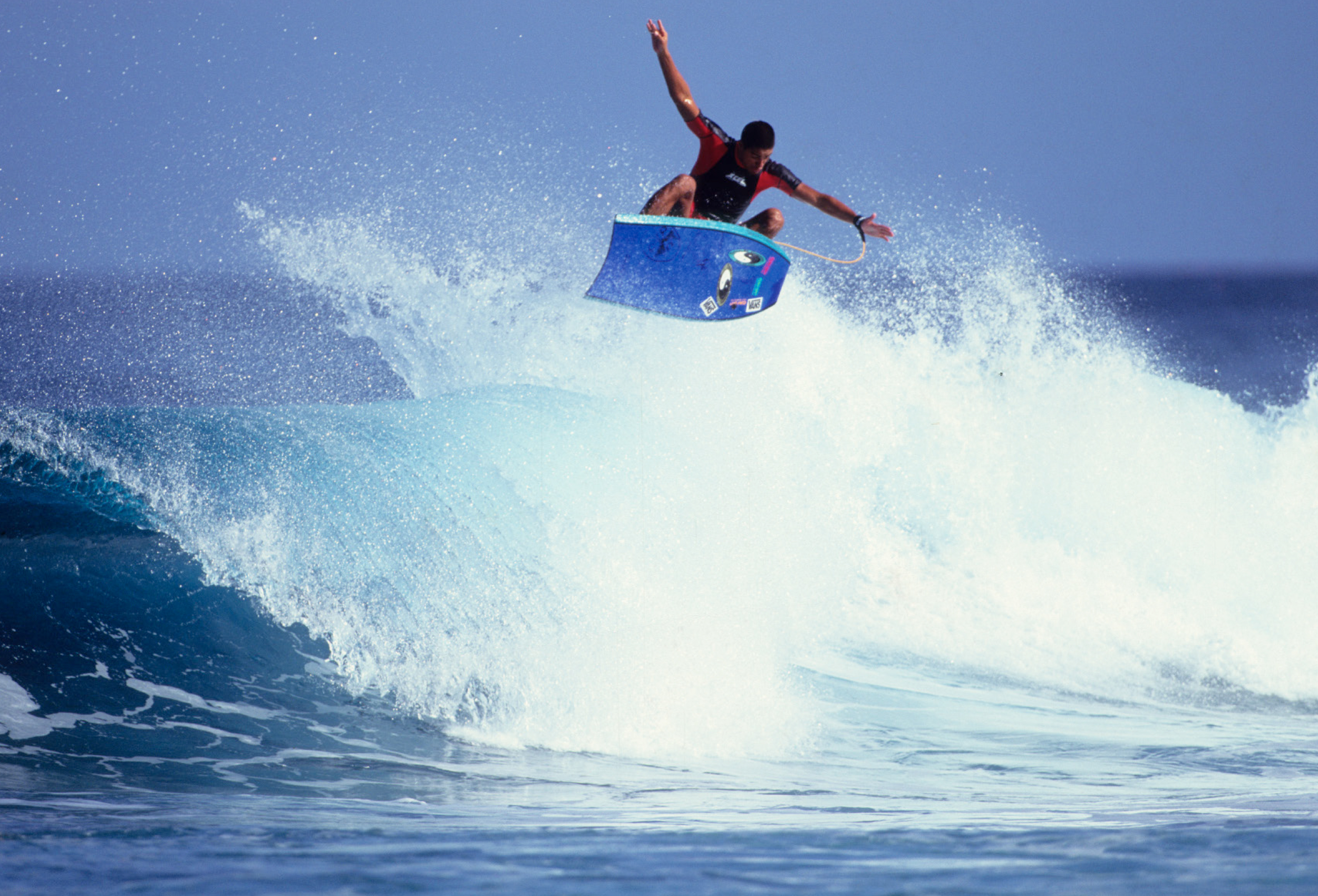
“I didn’t do the tours and take it as seriously as everyone else,” says Chris. “I’d go out in the contest and get as much speed as I could and launch the shit out of it. I didn’t give a fuck. I was like, ‘I’m gonna Christian Fletcher every contest I get into.’”
Photography
Hank Photo
“You’d see this animosity between the Town and Country guys, but because I was in the centre of it, I was like a total roll-in,” he recalls. “Wherever the waves were, I would go. I’d catch the bus and stash my board in the bush, whatever, and I’d meet up with all these clans.”
While some sections of the surfing community viewed bodyboarding, and in particular stand-up bodyboarding, as some whacky offshoot of core surfing, this was not the case on Oahu. For many, it was the modern incarnation of Hawaii’s ancient tradition of wave-riding; one in which ingenuity, creativity and joyous expression were the ingredients, rather than performance.
Even so, Pipeline was still the best wave in the world and a guy on a 42” piece of foam without fins would always struggle to be taken seriously by some.
“To be able to do it at the level I was doing it, you had to be completely out of your mind, and you had to be strong and you had to stand up to everyone and anyone,” says Chris.
Punch-ups were common. The North Shore in Chris’s youth was as heavily localised as it ever was. For the most part, it belonged to either native Hawaiians, those gifted enough to win the respect of native Hawaiians, or anyone else who’d grown up tough and knew how to throw down.
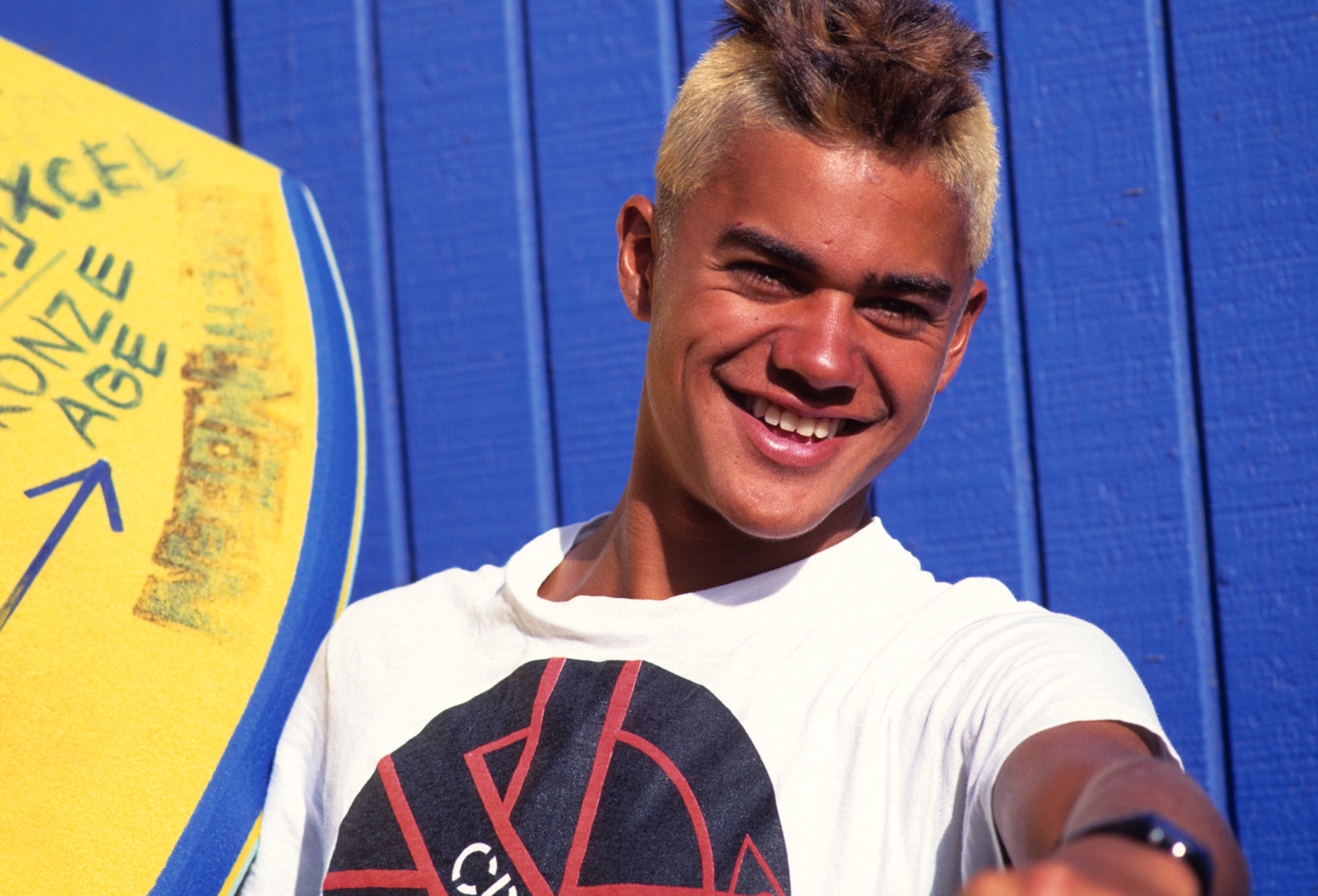
“You don’t got no fins, you’re on a little fucken thing and no one gives a fuck about you when you’re in Hawaii,” Chris recalls. “They’ll swim around you all day long and they won’t give a fuck. So you gotta say, ‘Hey I’m going and you’re not going and if you are going we’re gonna get into a huge collision and we’re both gonna eat shit.’”
Photography
Hank Photo
After years of dedication to the wave, Chris was taken under the wing of two of the west side’s greatest and most feared surfers, Sunny Garcia and Johnny Boy Gomes. He would also forge friendships with two-time Pipe Master Ronnie Burns, Da Hui founder Eddie Rothman, and tells me his power hacks were heavily influenced by the kind of surfing Pancho Sullivan was laying down at the time.
“After guys saw how determined I was to do this shit, I had guys like Johnny Boy Gomes and Eddie Rothman and Sunny Garcia and every single other monster out there just proud of me because I wouldn’t give up, and they started helping me get waves at Backdoor and I started getting my bombs,” he recalls.
When it came to contests, Chris totally lost interest.
“I didn’t do the tours and take it as seriously as everyone else,” he says. “I’d go out in the contest and get as much speed as I could and launch the shit out of it. I didn’t give a fuck. I was like, ‘I’m gonna Christian Fletcher every contest I get into.’”
In the right waves, however, Chris remains convinced stand-up bodyboarding can still trump a conventional surfboard.
“Because there are no fins, you can side-slip it and the flexibility means you can sit in the back on the foamball, and if you know how to play the break right it’s easier than a surfboard. Surfboards have those fins that are trying to track you up. On that thing, I could play the barrel at V-Land from beginning to end and come out with spinners.”
It might not have reached the heights it should have, but stand-up bodyboarding isn’t entirely dead – especially in Polynesia. Hawaii remains a hotbed of it, while Tahitian charger Matehau Tetopata is known to pilot thick cuts at Chopes while standing on a sponge.
Byron Bay’s friction-free brothers, Ari and Raf Browne, made their name at The Pass stand-up bodyboarding. Bodyboarder star, Dave Hubbard, splits his time between prone, DK and standing up. And riding longer, finless fibreglass boards has experienced an explosion, largely thanks to Derek Hynd. Take a look at many foam surfboards on the market, both with fins and without, and you’ll also see the unmistakable influence of the shapes ridden by the likes of Taloa, Kim and Calvin Yap.
As for where it could have gone had it not been silenced professionally? That is anyone’s guess.
“Because no one pushed it, no one’s ever gonna know,” Chris says.
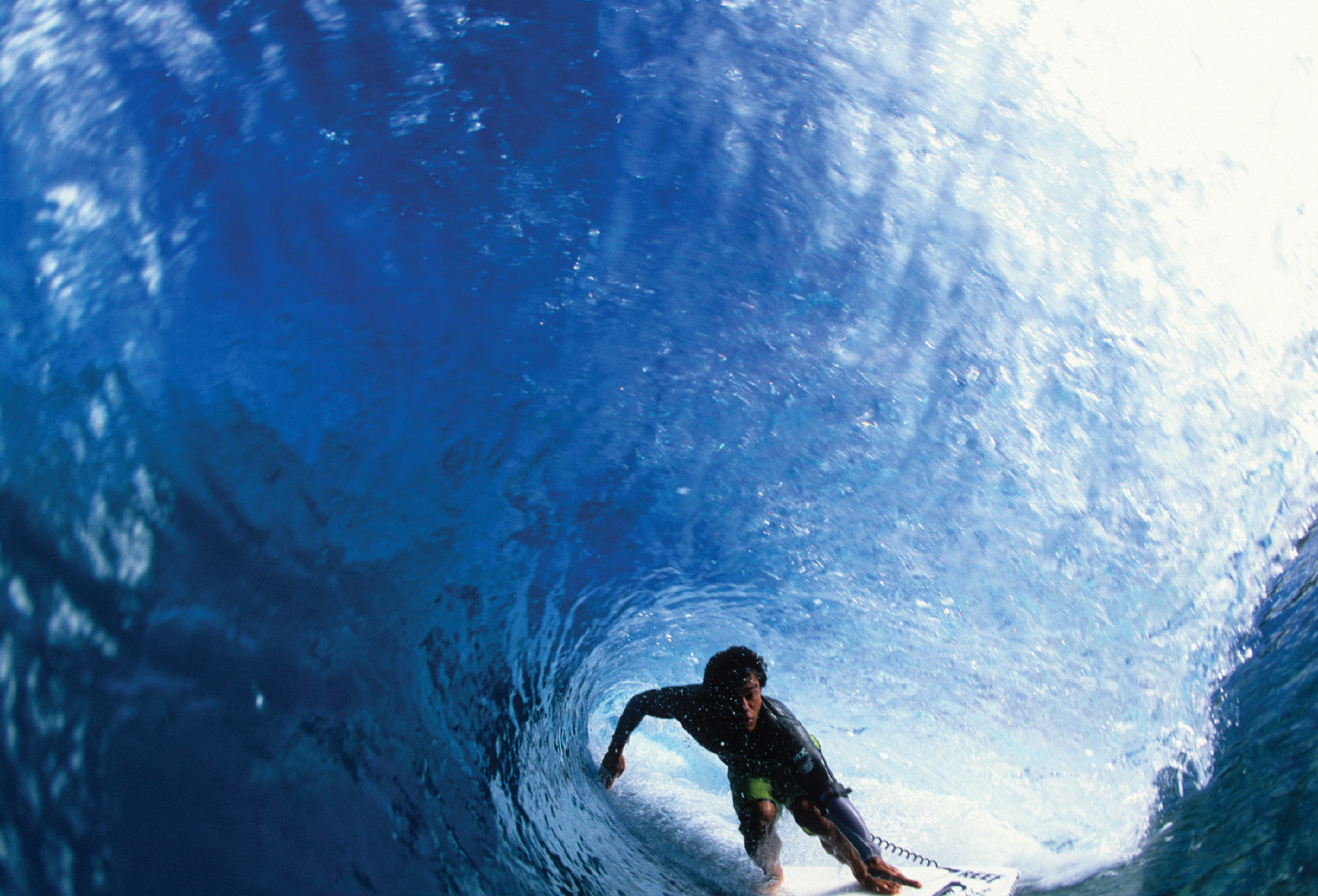
“In the lineup, he was a Hawaiian before he was a bodyboarder, let’s put it that way,” says Bielmann of Chris. “He wasn’t like a badass, like a Kala or anything like that, but he definitely wouldn’t let anybody get away with anything.” And the philosophy Chris was so quick to defend? “I believed that the board should be used for everything,” he says. “Drop knee that fucker, prone that son of a bitch, and stand up – whatever the fuck the wave qualifies for you to do.” Can’t argue with that.
Photography
Hank Photo
Chris Taloa’s Guide To Stand-Up Bodyboarding
When you see guys doing it now, they’re not using their body properly. You’re supposed to use your body like a massive spring to absorb all that chop so you can have control of your board. Guys are so freaked out that they’re putting so much weight on their back foot, so it looks like they’re rolling the windows down. They’re doing that because they’re putting way too much weight on their back foot. They don’t realise it’s not about how much weight you put on the back foot at all. It’s like a snowboard: you guide it with your back foot and the front foot is your fin.


Comments
Comments are a Stab Premium feature. Gotta join to talk shop.
Already a member? Sign In
Want to join? Sign Up