













Puerto Ricans Are Suing Their Government To Protect Rincón’s Coast
A court battle will determine the fate of a controversial bike path project near one of the town’s best rights.
Rincón is going through it right now.
During a non-violent protest against a proposed concrete wall, asphalt gutter and coastal bike path, three people were arrested last year in Rincón for sitting in the path of oncoming bulldozers. They were reportedly later released and not charged. But it was another blow for a surf community fighting to keep its shoreline intact. At bare minimum, they want a project that is legitimate and transparent. And they’ve had to go to court for it.
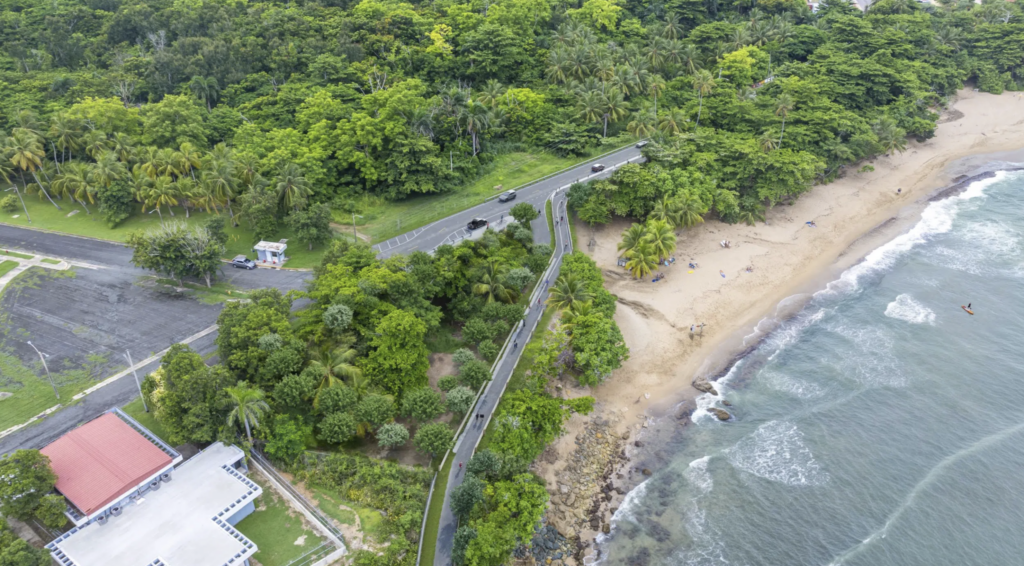
The issue at hand stems from a new bike and pedestrian trail funded by Puerto Rico’s transportation highway authority, ACT. The scope spans two miles over multiple beaches, including Tres Palmas, one of the Caribbean’s bigger reef breaks when it’s on. The government’s plan for biking, parking, retaining walls, sewer and electrical facilities requires paving and removing trees, walkways and coastal access points that have existed for decades.
The proposed path also cuts through Bosque Comunitario La Armonía, a community-led reforestation and erosion control program. Locals worry that construction will have all sorts of impacts on the dynamic marine ecosystem. Specifically, pavement of coastal access, disrupting native vegetation, increasing sediment runoff and damage to coral reefs.
Not all Rincón residents are opposed to a bike path. Just the kind that goes through a federally protected marine reserve and bypasses the regulatory checks and balances. That’s the gist behind the lawsuit filed in December by Amigos de Tres Palmas, a non-profit that helped found the Tres Palmas Marine Reserve. The group alleged that ACT violated numerous building and environmental regulations with regard to the project.
The story has entered the courtroom drama chapter. Testimony is underway, and more hearings are slated this spring, with government witnesses scheduled to stand trial at the end of April. The presiding judge issued a stop-work order for the coastal part of the project until the case is resolved. Construction is still allowed on the inland side of the main road in Rincón.
For opponents, this project is akin to expecting a kitchen remodel and finding your whole house got a soulless modern overhaul. Now it’s pissing off the neighbors. Paseo Responsable, a coalition of Rincón residents, business owners and nonprofits trying to bring transparency and accountability to the project, put it bluntly: “An 18-foot concrete and asphalt gutter built through a protected marine reserve — in an active erosion zone, over filled wetlands, without a valid environmental review — is not a bike path. It’s the beginning of the kind of abandoned coastal ruin that scars the island’s history.”
One of the big issues that will be scrutinized in court involves an apparent disregard for Junta de Planifacion, Puerto Rico’s equivalent of a state planning agency that’s responsible for regulating land use, permits, and environmental compliances. The agency required the highway authorities to file for a new permit when they did a redesign of the bike path in 2016. ACT reportedly never did, and submitted the original approved permit with the old plans, then continued with construction.
The other claim by the plaintiffs: blatant fraud. According to Amigos, ACT submitted two different cadastros, unique parcel numbers, into the permitting system for the Rincón bike path. One of the parcels sits in a FEMA-designated coastal high-risk flood area, where properties face extreme flood hazards from storms and big swells. It’s known as a VE zone, and federal law requires extensive environmental review and construction standards for anything built on those parcels. Allegedly, ACT knowingly avoided filling a permit within the VE zone, which would have triggered a larger environmental impact report and void any exclusions. A former executive director of the Puerto Rico’s planning department and former ACT board member has already given testimony that identified structural permitting violations.
Rincón residents are also dubious of the mayor, whose audits since 2001 have flagged violations about public money and government contracts. The mayor before him was arrested and put in federal prison for bribery, money laundering, and witness tampering.
It sounds like tedious, time consuming work, but this is kind of legwork required to make sure places surfers care about don’t change, irrevocably, without due process. It’s the same drive that helped protect waves in Malibu, Trestles, the North Shore, and many more spots. Here’s to hoping something productive comes from this. To learn more, click here for a deeper dive into the story, and here to sign the petition to hold ACT accountable.


Comments
Comments are a Stab Premium feature. Gotta join to talk shop.
Already a member? Sign In
Want to join? Sign Up