




Julian Wilson Vs Shopify
Rivvia’s founder on office life, stretching the dollar and their latest team edit.
View Rivvia Projects’ latest collection here.
Moss doesn’t grow on a rolling stone.
Which partially explains how Julian Wilson was able to claw his way out of the Burleigh CT trials event, win six heats on the trot, and put the sword to Filipe Toledo in one of the most thrilling finals in recent memory, despite not having surfed a ‘serious’ heat in three years.
Julian could’ve taken the Nike, Hurley and Red Bull cash he made during pro surfing’s golden years, parked it somewhere sensible, and spent retirement perched at The Prince with a schooner.
Instead, he chose something considerably sexier: getting an office job and learning the backend of Shopify.
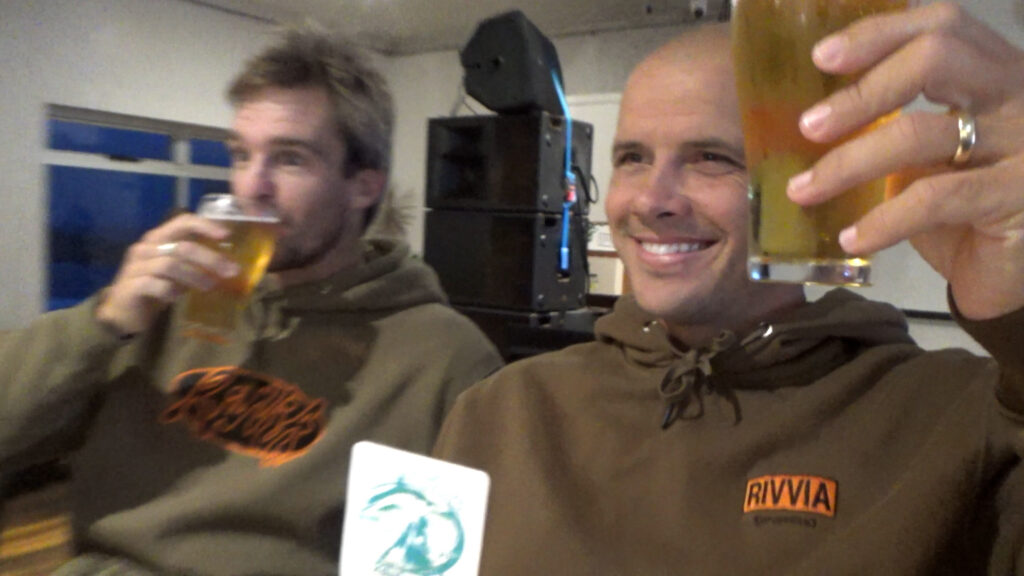
“I tell you what, making a final at Burleigh, coming off three years not competing, was a hell of a lot easier than spending four years building a brand,” chuckles the 37-year-old Olympian, 5x CT winner, and father of three.
Burleigh proved the surfing was still razor sharp. The pointier question was whether another run at heats and trophies mattered enough to pull him away from Rivvia.
“Coming off the high of an amazing result on the Gold Coast, it was probably the most wholesome competitive experience of my career,” he says. “To have my three kids there, get on a roll like that, have the hometown crowd, all those things. It was an amazing experience.
“But at the exact same time, I was dealing with the reality of losing our head of marketing to another brand. That’s a hit, but it’s also a massive compliment,” Wilson says. “They’re votes of confidence that we’re doing something that people in the industry are seeing value in.”
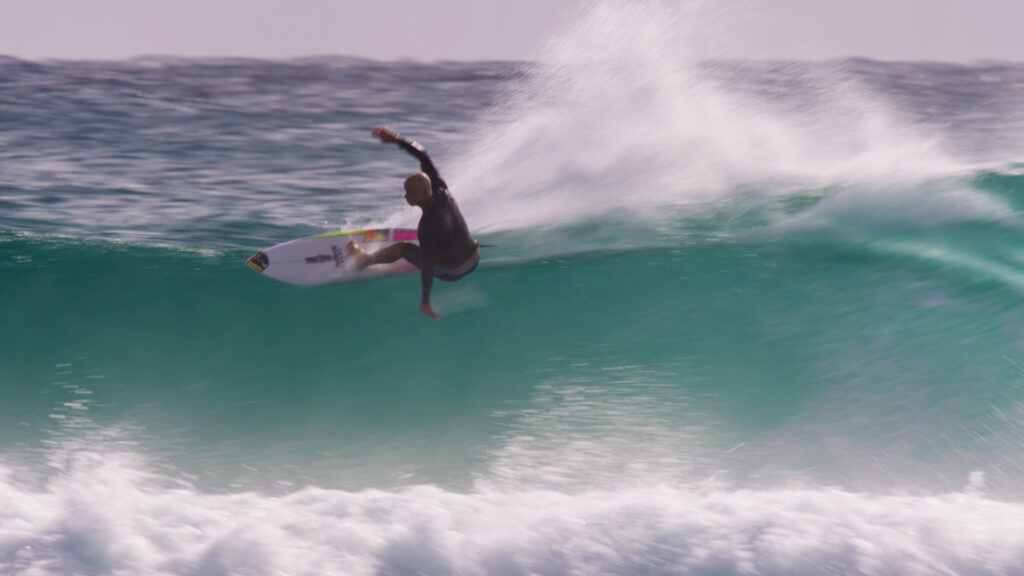
In the months after his Burleigh blitzkrieg, Julian went back to answering customer service emails, packing orders, hiring more staff, working through budgets, scouting designers, manually processing 11,000 units of clothing returned from America, plugging inventory into Shopify, dropping quarterly collections, and still surfing well enough to star in edits worth watching.
Increasingly, that trade made more sense to Julian than another lap around the competitive hamster wheel.
“To go back and chase heat wins and trophies just didn’t sit with me the same as building a lifelong brand,” he says. “I’ve put a lot of money into it, and more than I ever thought I’d be putting into it, but I’m not interested in making a shitload of money.”
“My absolute dream would be to be able to turn around and go like, ‘Hey, Griff, or one of these top guys, here’s an actual paycheck like what I used to get. Irrelevant to where the industry’s at and what the standard is, this is what you guys deserve and this is what I’ve worked hard to do.’ That would just be the sickest fricking thing I could ever imagine doing.”
It’s a noble endgame. Getting there, however, currently looks a lot more like having a job job.
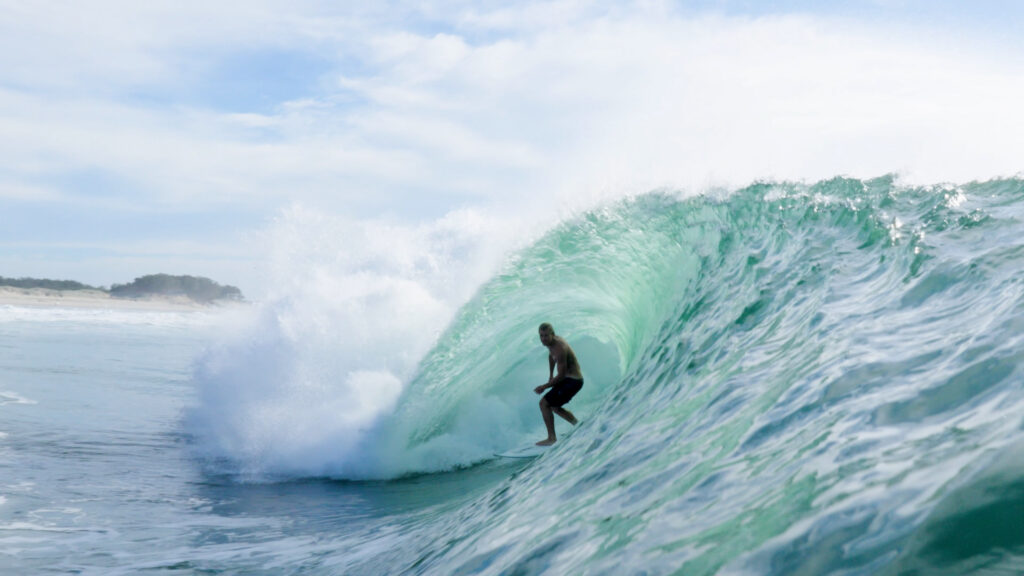
“I have my fingers across every part of the business,” he says. “And because I’ve done almost every role, I’ve got a sense of what’s achievable.
“So there’s absolutely no areas where it’s like, ‘Oh, I guess that’s acceptable, whatever their work rate is.’ You know what’s capable, so you know what you want to keep them accountable to.”
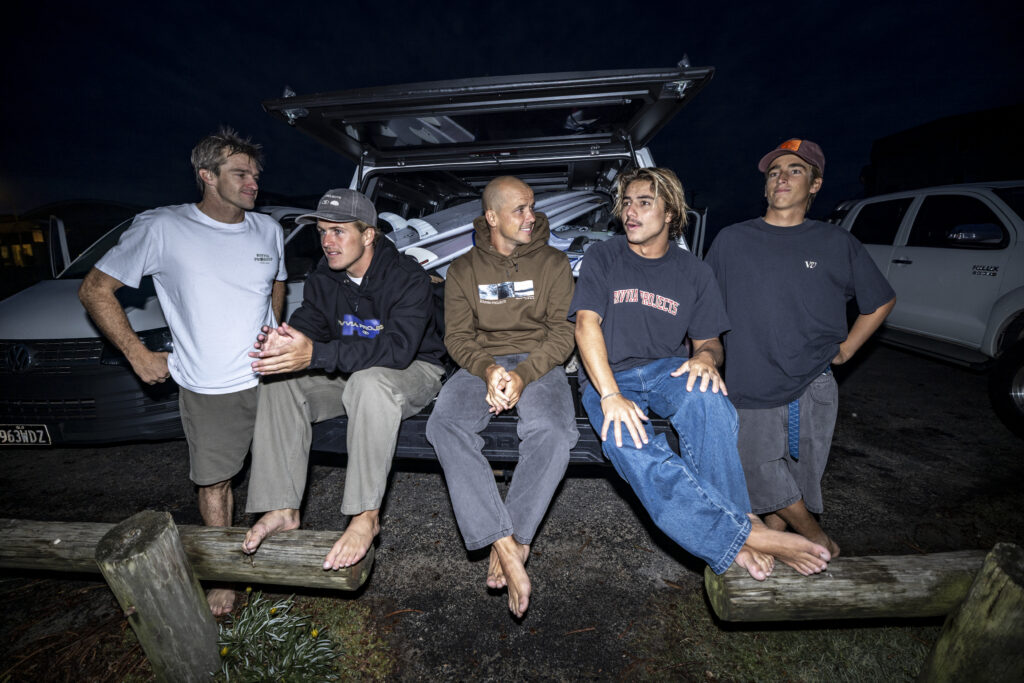
There are a few upsides to doing everything yourself. When you chop your own wood, it warms you twice. You also get a fairly unforgiving education in what every role actually demands before asking somebody else to do it. More importantly, it keeps you moving, which brings us back to the moss.
“I still have the hat to be the surfer and still get clips and get pushed by the team to still be at a level that’s respectable,” he says, “while I’m spending the majority of my days in an office chair really working on creative, working on building the team, working on hiring employees, working on budgets, working on everything that it takes to survive in this game.”
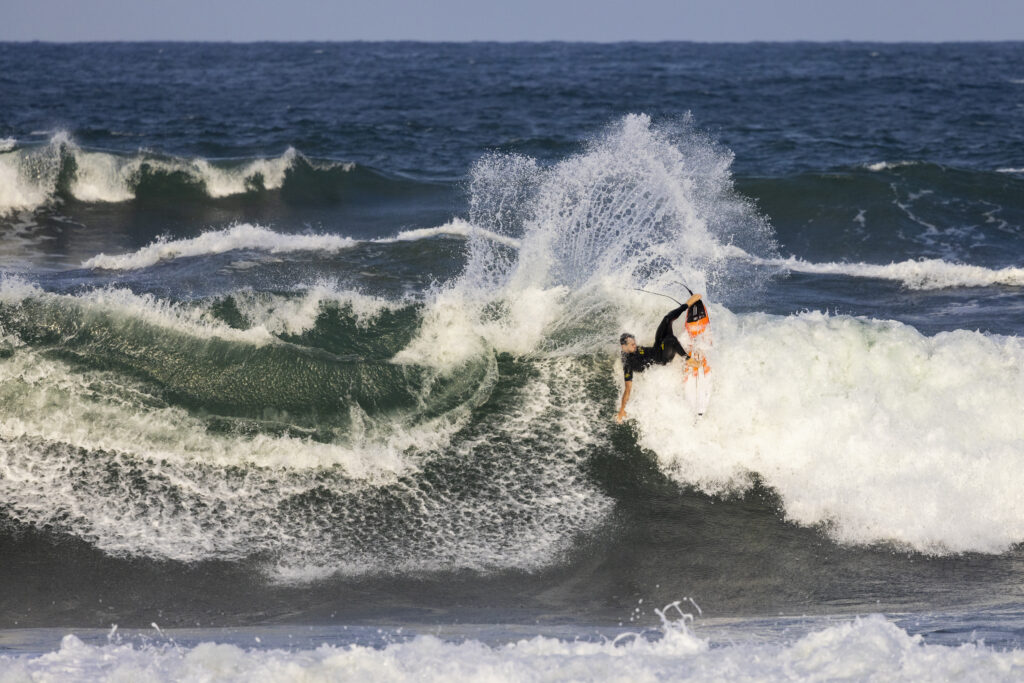
After launching in 2022, Julian and Rivvia joined a fairly short list of decorated surfers who took their name, money and taste into apparel after competition. Kelly Slater had Outerknown. Dane Reynolds and Craig Anderson had Former. John Florence had Florence.
Rivvia never leaned especially hard into nostalgia, counterculture or being so edgy you could cut yourself on it. The clothes are sporty, loose-fitting and respectable enough that your partner probably won’t chew you out for wearing them to dinner with the in-laws.
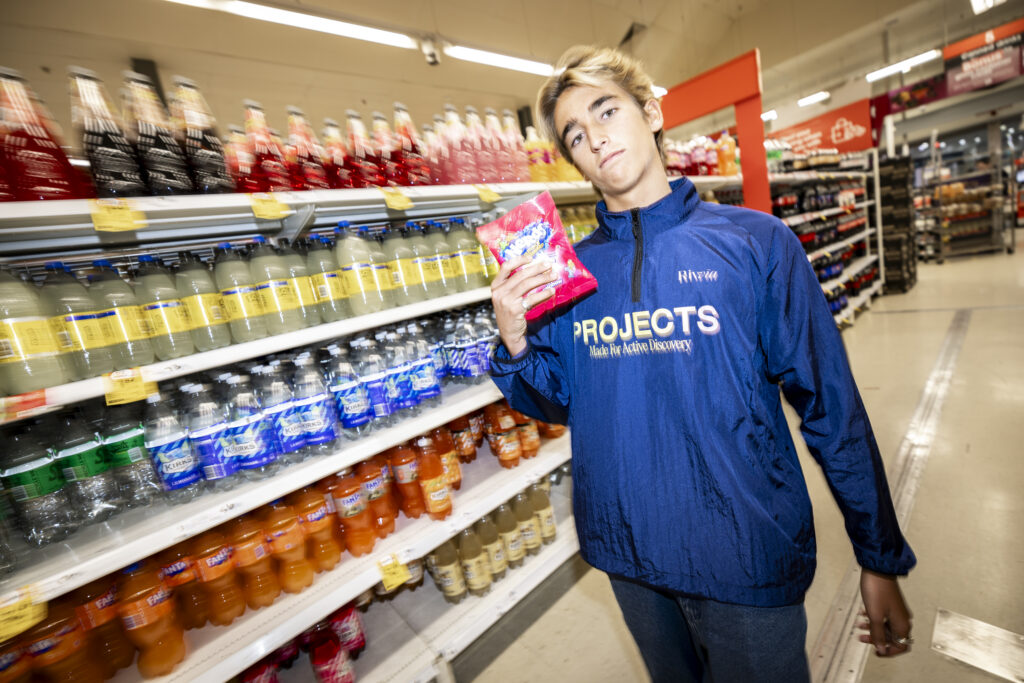
“We’re just surfers that love to surf and motivated to put everything into carving out a place for something that we feel super strongly about,” Julian says. “Just making good products and making stuff that the team wants to wear, and the team’s a part of the whole creative of the brand.”
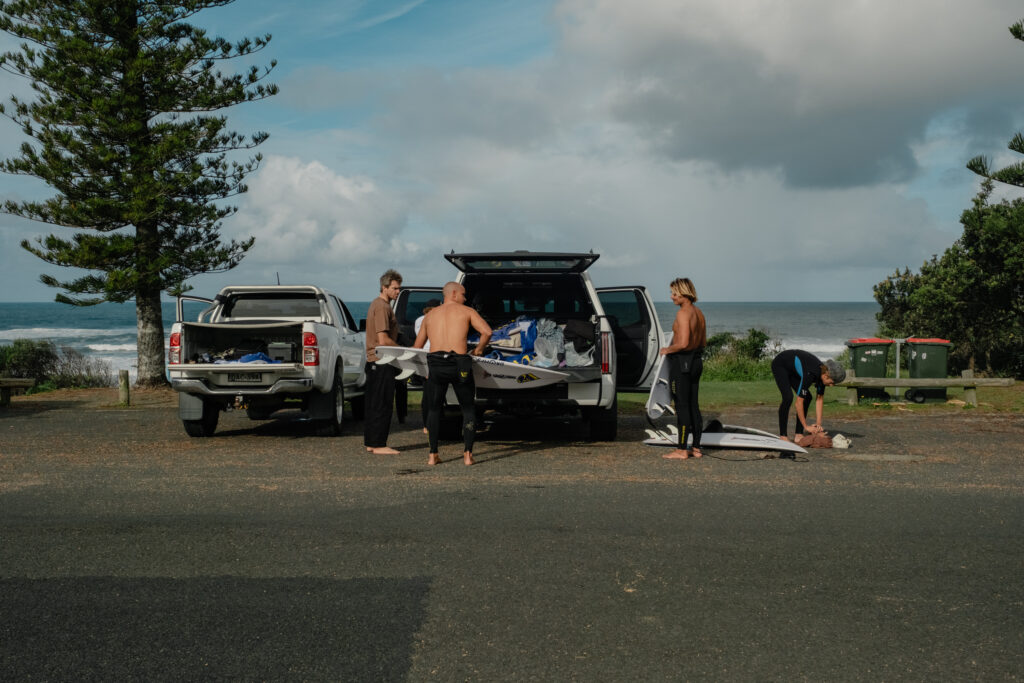
The most visible expression of that philosophy right now is VV Tapes Vol.002, the second instalment in Rivvia’s quarterly film series, shot and cut by Julian’s close mate and longtime filmer Jimmy Lees. Vol.002 was made over eight days and 216 kilometres between Straddie and Yamba. At 16 minutes, it’s less a grand cinematic statement than a demonstration of strike rate: good surfers, even in average conditions, waste very little.
“We don’t have the money and the resources to go and make a full-fledged film and hold out on clips for a year and a half, two years, and put a bunch of money into it,” Wilson says. “We actually can’t do that. We’re just focusing on building the brand today. We can’t really build the brand in the future because cash flow and business, we’re not there yet.”
He’s equally frank about why.
Tariffs forced a major restructure last year. Rivvia effectively had a choice: rebuild around Australia or let the thing go. Wilson chose Australia, where the brand is now humming along with 45 stockists and ecommerce doing a lot of the heavy lifting.
He describes Rivvia’s current state as a “second phase”: dedicated Australian staff, fewer shared resources, a more clearly defined product, and enough structure that every missing employee or missed opportunity no longer lands directly on his desk.
As the business gets steadier, the team is getting deeper. Caden Francis, the former Stab Innocents kid and Australian Junior Champ, has already been given enough creative rope to design his own Rivvia collection. “I can’t speak highly enough of that kid,” Julian says. “He’s just really maturing. I personally love the way that he surfs and he seems to be getting better every time we do a trip.”
Caleb Tancred, Rivvia’s first recruit, has returned to full-time surfing after finishing an architecture degree and is currently taking his first proper crack at the Challenger Series. “If he can crack that CT level, he’s a serious contender at that level,” Wilson says. “There’s a beautiful story there to come out, especially if he hits his potential. It’s very unique. He’s incredibly talented, and I think he’s got that mindset that when he properly locks in on something, he’s going to get it done.”
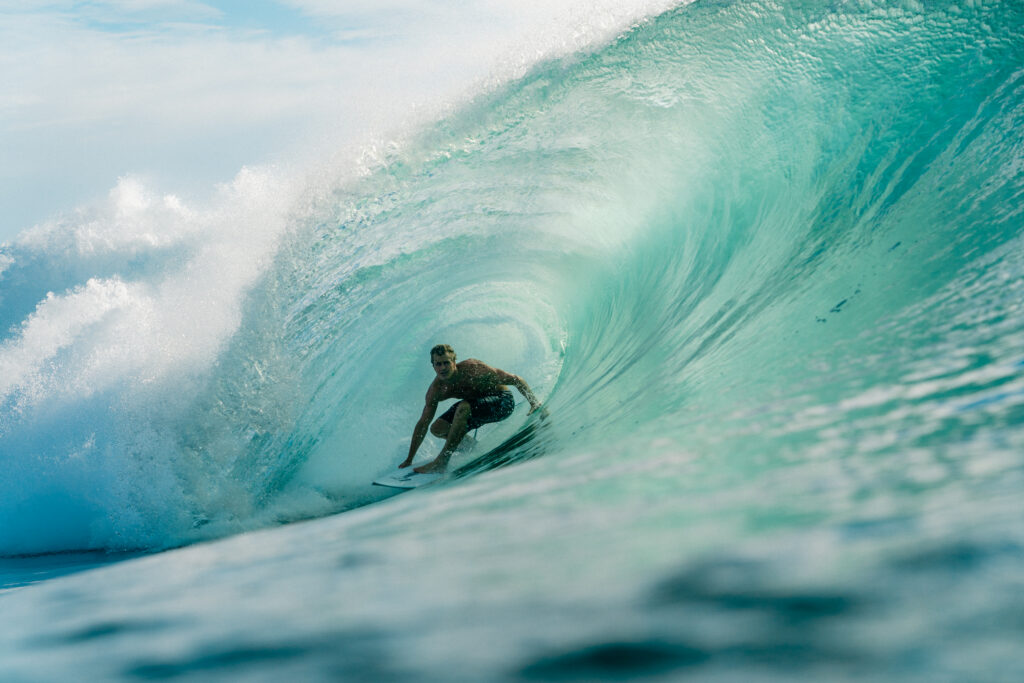
Then there’s Mateus Herdy, currently battling for his post-season spot at Trestles while he backs himself through the CS. “He had moments at Snapper taking down some of the big guys and free-flowing it creatively and putting his twist on Snapper, which I was really proud to be a part of,” Wilson says. “If his confidence shows up and he starts making everything like he can, then he becomes a threat.”
And finally Ryan Callinan, who got equity in the biz at the beginning of 2025, “Ryan’s taken a year off competing, and on our last few trips I’ve felt like his surfing has hit a completely different level. It’s all freed up. It’s the best surfing I’ve ever seen him do, and he’s doing it for our movies, which is amazing.
He’s also part-owner in the business now through the deal I did with him to get him involved in Rivvia, and you can definitely feel that extra energy he’s putting into the brand. It’s an amazing compliment to have someone like Ryan investing his time and energy into something I created four years ago.”
The team fits the brand: smart, sporty, switched-on.
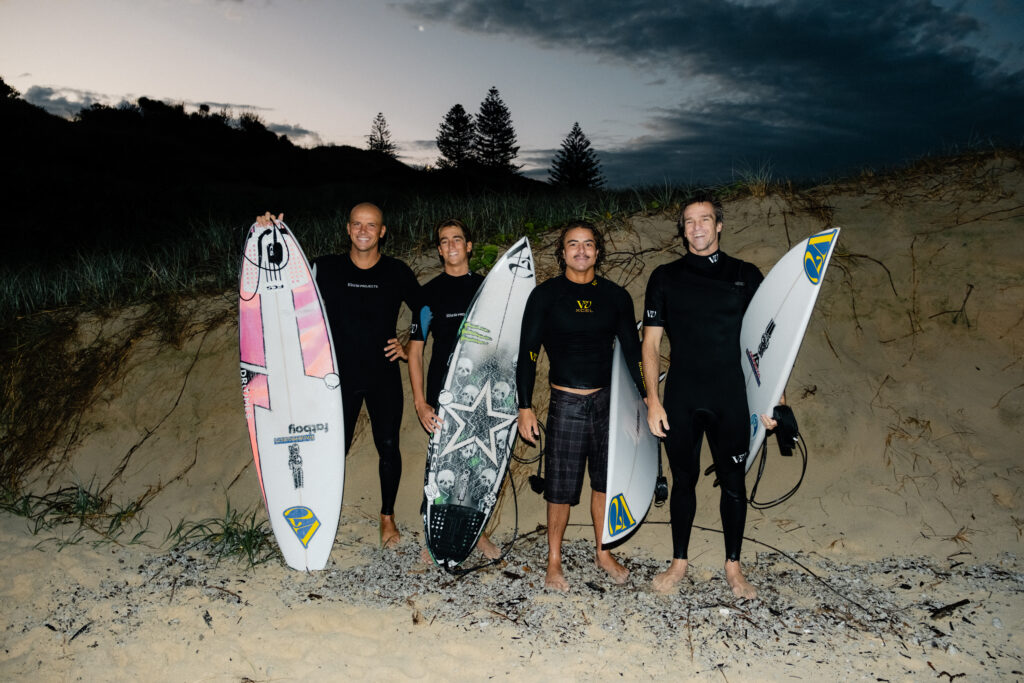
More importantly, it explains the longer game.
Julian benefited from a version of professional surfing with considerably more money sloshing around in it. He wants Rivvia, eventually, to provide some version of that support to the next crop. Founder ownership at least means that, if the company ever reaches that scale, he gets to decide where the money goes. He was paid extremely well during an era when surf companies could afford to do that. Now he wants to build one capable of passing some of that opportunity down.
For the moment, the ambition is considerably larger than the balance sheet. Rivvia cannot finance a two-year surf film. It can finance eight good days with a van, a good filmer, a good editor and a group of surfers who rarely seem to waste a session. It cannot yet hand a world-title contender a golden-era contract. It can give Callinan ownership, let Francis design, back Tancred’s return, put Herdy on trips, and keep hiring good people even when bigger companies come looking for them.
“I think it’s going to take a brand like what I’m starting, where it’s founder-owned and founder-run, and it’s for the surfers, and it’s for surf trips, and it’s for them to chase world titles, and it’s for the right reasons,” Wilson says.
“That’s what motivates me. That’s my key motivation that keeps me going and keeps me motivated to keep putting money in that I was lucky enough to earn through an amazing time in the industry that doesn’t exist today.”
View the latest collection here.