



Dane Reynolds by John John Florence
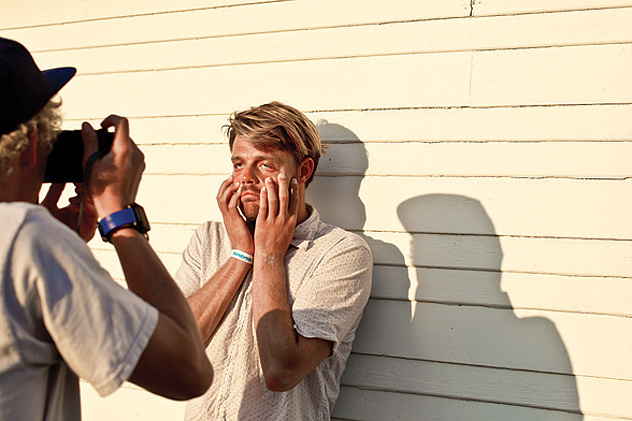
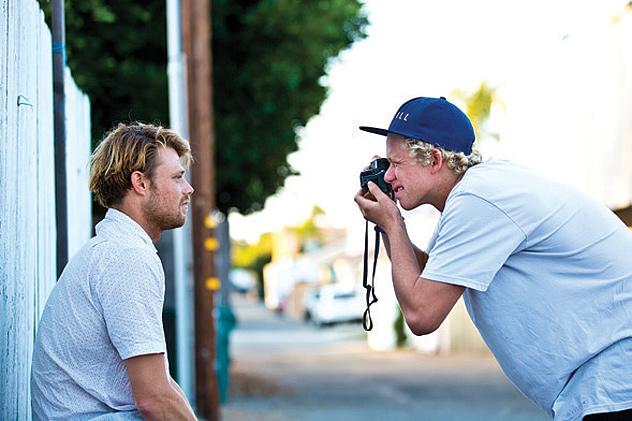
From Stab’s annual hard cover book: He makes an unlikely photographer, crouched there in his shorts, t-shirt and hat, face screwed up behind the camera’s viewfinder… This ain’t as easy as conjuring a last-minute win out at Pipe or sliding his ass into a Cloudbreak face, controlling the macro world with micro movements. That sorta thing comes easy to John John Florence. But, here, photographing Dane Reynolds for the cover of this book, the same heroic character whose surfing is admired like a beautiful and glorious object, well, that’s pressure. John cradles his German-made Leica M7 like a hamburger, the fingertips of both hands touching the hot shoe flash mount. The Leica is a rangefinder which means the photographer focuses by turning the lens barrel until two images in the viewfinder are perfectly aligned. It is a very famous camera because the glass that channels the image onto the film is the best money can buy; not necessarily the sharpest, but warm and with character. John knows a thing or two about high-end photographic equipment. He also owns a Rolleiflex, a twin-lens reflex camera of the sort that kicked around London studios in the sixties, a camera you hold low as you focus looking down into the waist-level viewfinder. He has a RED camera, too, those game-changing HD cams, just cause he was “super psyched” on ‘em and, now that money ain’t the consideration it was back when him and his brothers were sharing their little North Shore house with packs of surfers to cover the rent and food, he ain’t afraid to treat himself a little. But, today, readers, we see John John and Dane acting and reacting to each other. It’s a rapport, and an access, that is allowed to no other photographer in the world. Reynolds reveals his essential good nature. He mugs for the camera. He pulls his eyelids down. He struts and makes mock modelling poses. He jumps, karate-style through the frame. John is able to profit from the electromagnetism that fuels their mutual respect. John is shooting film and the exposure’s have to be just so, particularly when a role of Fujia Provia transparency film is pushed into its cradle. There’s no second chance here, no digital crutch to lean on. Get the film speed wrong when you’re working out your exposures and there ain’t the latitude to correct your mistakes. The whole game is different. There ain’t no…kashick…stop to check screen… open up a stop… kashick…check screen… back a quarter… kashick… stop, check screen…oh, he had his eyes shut…let me shoot that again… John just shoots, shoots, shoots. Thirty-six frames on every roll. The lens is his favourite, a 35mm wide-angle lens. The camera is quiet because, unlike SLRs, rangefinders don’t have a piece of glass that slaps every time the shutter is pressed. It makes ‘em a favourite with foreign correspondents ‘cause you can waltz into sensitive situations and no-one hears a thing when you punch the button. John swallows the last half of a roll of black-and-white film that was already in the camera. Then a roll of Kodak Portra VC, one that contains the cover. Finally, it’s the slide film. And, here, the pressure tells a little, when the film speed is set too fast and the red filter he uses to get contrast on his black-and-white film is left on. Three stops underexposed means y’can forget about processing it as a transparency. But, how about we try a trick called cross-processing where the slide film is treated like print film? The results are unpredictable, each film is a different combination of chemicals, and often the shots can be ruined, but what choice do we have? You see those red shots? Where the red contrasts dramatically with the black shadows, where we see Dane’s girlfriend shadow projecting Peter Pan-like onto the same focal plane as Dane? It’s a mistake that works. This wasn’t a sympathy project or a gimmick. Stab had seen John’s work and we could see he comprehends the elements of a great photo. Stab had an appetite for a connection between the cover subject and the photographer. And, here we are… STAB: What do you recall about the day? I remember I screwed up that roll of Provia and I remember being super nervous, sick nervous, just thinking about it. I’ve never shot anything like that. I just shoot for myself. Dane could feel it and he organised himself well in front of the camera. He was actually very kind. He knew how nervous I was. What photographs are you most happy with? It’s ironic, I guess, that I prefer the red ones. What do you like about your Leica camera? It’s small because it’s a rangefinder and so it’s very good for travelling. The shots have a certain look, too, and every photo comes out really crisp, almost with its own personality. Why do your prefer film? It just has a different look and a different feel. But, more than anything, it’s fun to mess around with, to figure it out in your head all the different variables, to get it developed and be surprised with what comes back. And, with film, you learn a lot more about the craft of shooting a picture. What’s the best piece of photo advice you’ve had? There’s no single one thing, just an accumulation of knowledge. Every time you shot a roll you learn something new. What’s the hardest thing about shooting film? All the things you have to remember, but often forget. Like leaving the red filter on, which I did, like forgetting to change the f-stops, which I did, and the fact that when you shoot with a rangefinder what you see isn’t exactly what is being captured on film. That’s an advantage of SLRs. Does photography relax you? It takes my mind off surfing, that’s why I do it. Y’can buy the whole hard cover book online, over here.
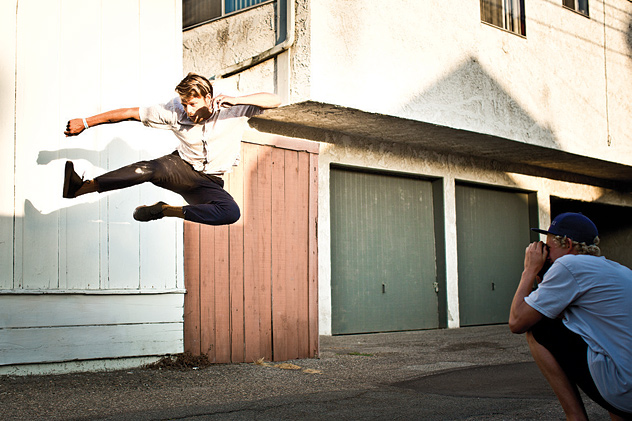
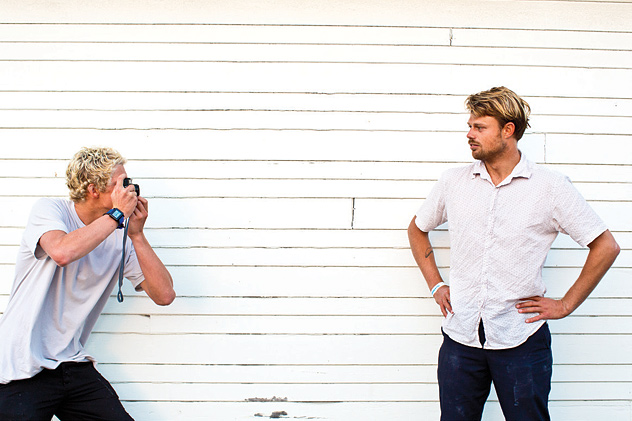
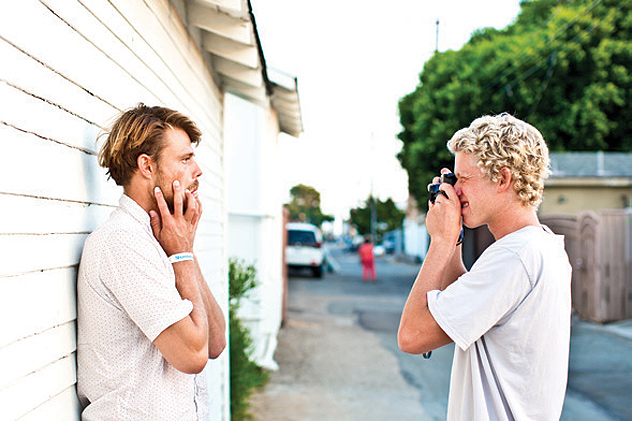
From Stab’s annual hard cover book: He makes an unlikely photographer, crouched there in his shorts, t-shirt and hat, face screwed up behind the camera’s viewfinder…
This ain’t as easy as conjuring a last-minute win out at Pipe or sliding his ass into a Cloudbreak face, controlling the macro world with micro movements. That sorta thing comes easy to John John Florence.
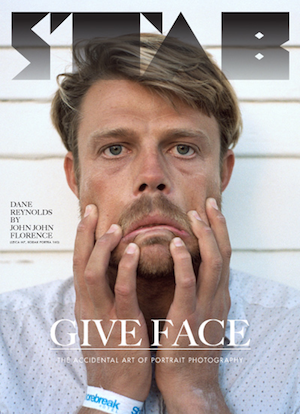
But, here, photographing Dane Reynolds for the cover of this book, the same heroic character whose surfing is admired like a beautiful and glorious object, well, that’s pressure.
John cradles his German-made Leica M7 like a hamburger, the fingertips of both hands touching the hot shoe flash mount.
The Leica is a rangefinder which means the photographer focuses by turning the lens barrel until two images in the viewfinder are perfectly aligned. It is a very famous camera because the glass that channels the image onto the film is the best money can buy; not necessarily the sharpest, but warm and with character.
John knows a thing or two about high-end photographic equipment. He also owns a Rolleiflex, a twin-lens reflex camera of the sort that kicked around London studios in the sixties, a camera you hold low as you focus looking down into the waist-level viewfinder.
He has a RED camera, too, those game-changing HD cams, just cause he was “super psyched” on ‘em and, now that money ain’t the consideration it was back when him and his brothers were sharing their little North Shore house with packs of surfers to cover the rent and food, he ain’t afraid to treat himself a little.
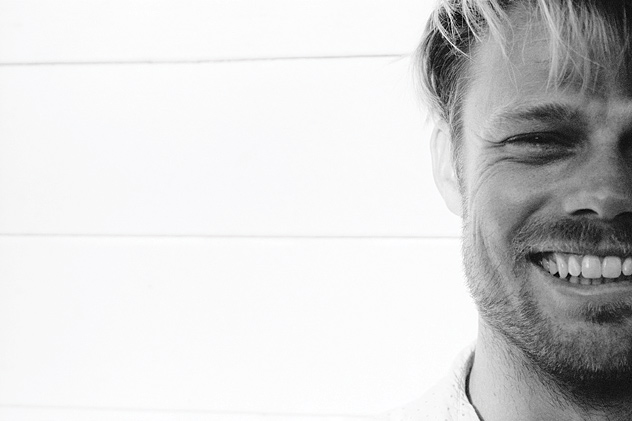
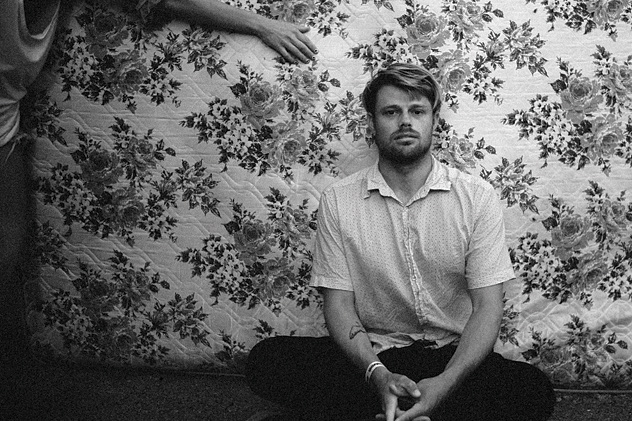
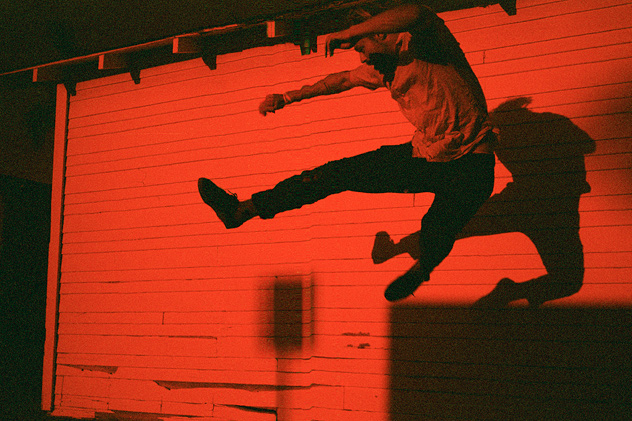
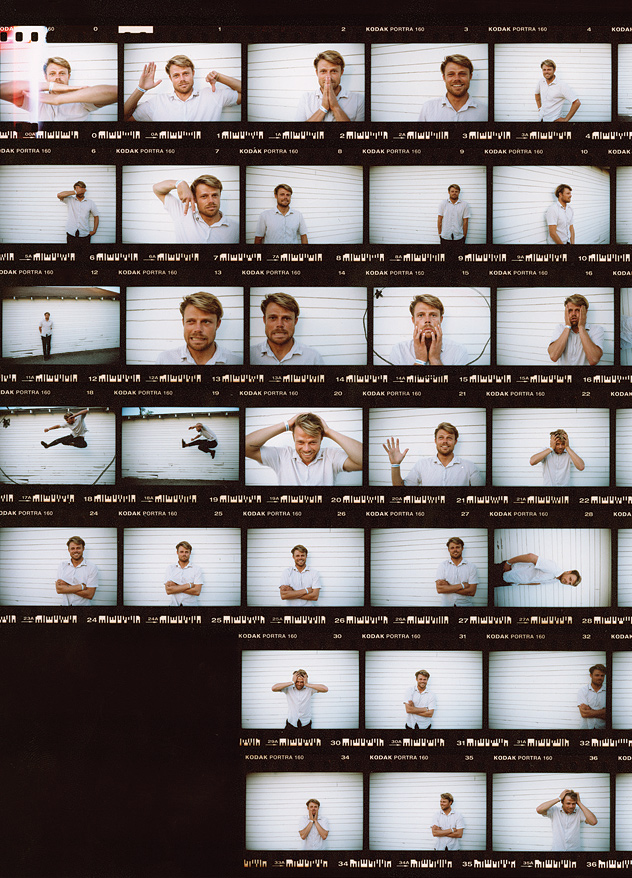
But, today, readers, we see John John and Dane acting and reacting to each other. It’s a rapport, and an access, that is allowed to no other photographer in the world. Reynolds reveals his essential good nature. He mugs for the camera. He pulls his eyelids down. He struts and makes mock modelling poses. He jumps, karate-style through the frame. John is able to profit from the electromagnetism that fuels their mutual respect.
 John is shooting film and the exposure’s have to be just so, particularly when a role of Fujia Provia transparency film is pushed into its cradle. There’s no second chance here, no digital crutch to lean on. Get the film speed wrong when you’re working out your exposures and there ain’t the latitude to correct your mistakes.
The whole game is different. There ain’t no…kashick…stop to check screen… open up a stop… kashick…check screen… back a quarter… kashick… stop, check screen…oh, he had his eyes shut…let me shoot that again…
John just shoots, shoots, shoots. Thirty-six frames on every roll. The lens is his favourite, a 35mm wide-angle lens. The camera is quiet because, unlike SLRs, rangefinders don’t have a piece of glass that slaps every time the shutter is pressed. It makes ‘em a favourite with foreign correspondents ‘cause you can waltz into sensitive situations and no-one hears a thing when you punch the button.
John swallows the last half of a roll of black-and-white film that was already in the camera. Then a roll of Kodak Portra VC, one that contains the cover. Finally, it’s the slide film.
And, here, the pressure tells a little, when the film speed is set too fast and the red filter he uses to get contrast on his black-and-white film is left on. Three stops underexposed means y’can forget about processing it as a transparency.
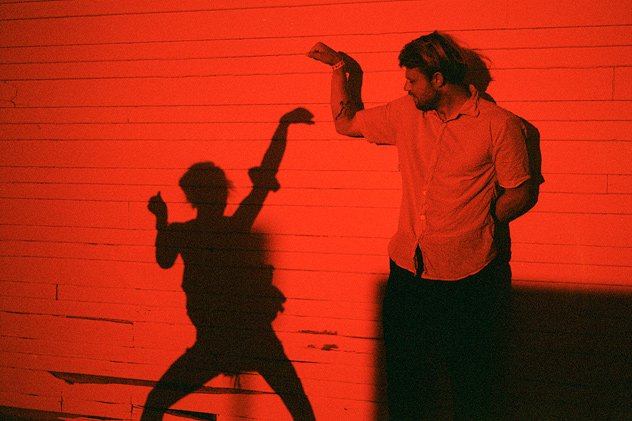
But, how about we try a trick called cross-processing where the slide film is treated like print film? The results are unpredictable, each film is a different combination of chemicals, and often the shots can be ruined, but what choice do we have?
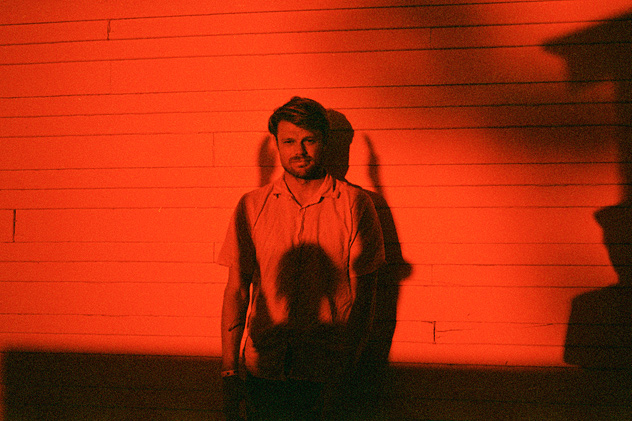
You see those red shots? Where the red contrasts dramatically with the black shadows, where we see Dane’s girlfriend shadow projecting Peter Pan-like onto the same focal plane as Dane? It’s a mistake that works.
This wasn’t a sympathy project or a gimmick. Stab had seen John’s work and we could see he comprehends the elements of a great photo. Stab had an appetite for a connection between the cover subject and the photographer.
And, here we are…
STAB: What do you recall about the day? I remember I screwed up that roll of Provia and I remember being super nervous, sick nervous, just thinking about it. I’ve never shot anything like that. I just shoot for myself.
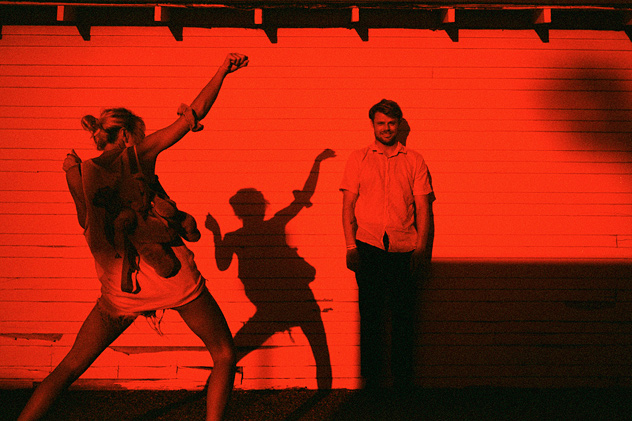
Dane could feel it and he organised himself well in front of the camera. He was actually very kind. He knew how nervous I was.
What photographs are you most happy with? It’s ironic, I guess, that I prefer the red ones.
What do you like about your Leica camera? It’s small because it’s a rangefinder and so it’s very good for travelling. The shots have a certain look, too, and every photo comes out really crisp, almost with its own personality.
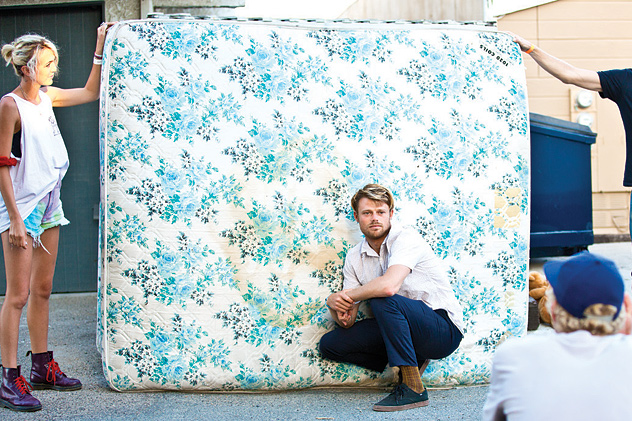
Why do your prefer film? It just has a different look and a different feel. But, more than anything, it’s fun to mess around with, to figure it out in your head all the different variables, to get it developed and be surprised with what comes back. And, with film, you learn a lot more about the craft of shooting a picture.
What’s the best piece of photo advice you’ve had? There’s no single one thing, just an accumulation of knowledge. Every time you shot a roll you learn something new.
What’s the hardest thing about shooting film? All the things you have to remember, but often forget. Like leaving the red filter on, which I did, like forgetting to change the f-stops, which I did, and the fact that when you shoot with a rangefinder what you see isn’t exactly what is being captured on film. That’s an advantage of SLRs.
Does photography relax you? It takes my mind off surfing, that’s why I do it.


Comments
Comments are a Stab Premium feature. Gotta join to talk shop.
Already a member? Sign In
Want to join? Sign Up